
Plate and Vehicle, One Pass
Plate characters plus vehicle class, body color and make, read on the same pass. Two-wheelers are a class of their own, with rider counting and helmet detection.
See Two-Wheeler Analytics
Automatic license plate readers for law enforcement usually mean an appliance per lane. IREX reads the plate and the vehicle behind it, in the national format the plate was actually issued in, checks it against the records that matter and makes every vehicle on the network searchable, without replacing a single camera or adding an LPR appliance per lane.
Beyond the Plate
Plates get obscured, misread and swapped, which is where an ALPR system that reads characters and nothing else runs out of road. IREX therefore reads the plate and the vehicle. Four neural networks run in sequence on each frame: the first finds the vehicles, the second classifies what each one is and what color it is (and, on a two-wheeler, how many riders it carries and whether they are wearing helmets), the third locates the plate on the vehicle it belongs to and the fourth reads the characters. A vehicle stays findable when the plate is dirty, partly covered, or wrong in the report.
The plate is read in the format it was actually issued in. A regional model is selected per camera and search accepts full and partial numbers on single and double-line plates, in normal, inverted and custom styles, with the country of issue held as its own field on the record. Release 4.33 alone added Gibraltar, Iceland, Bosnia and Herzegovina and more than ten other national formats and improved reading of plates obscured by snow, mud or tape. When a plate cannot be read at all, that is an event rather than silence: Invalid license plate and License plate is missing each raise at their own priority, so a deliberately covered plate is itself a lead.
Because the plate and the vehicle attributes are indexed together, an investigator searching a week later gets the whole context rather than a plate crop and can search on a partial plate with wildcards, on a vehicle class and color, on a make, on speed, or on the plate sitting in front of them on an event card.
What It Delivers
Plate characters plus vehicle class, body color and make, read on the same pass. Two-wheelers are a class of their own, with rider counting and helmet detection.
See Two-Wheeler Analytics →Single and double-line plates, normal, inverted and custom styles, with the country of issue on the record and a regional model selected per camera.
Every read is matched against your vehicle lists in real time and, where your agency supplies the dataset, against registration, insurance and inspection records.
Find every appearance of a vehicle across the network from a partial plate, a wildcard, an attribute filter, or one event card, then draw its route on the map.
A watchlist hit routes to the right officer through the Sover secure messenger with the plate photo, camera location, timestamp and a live video link.
Red light, stop line, wrong way, forbidden maneuver, illegal parking, right of way, railway crossing, lane restriction and average speed all rest on the same read.
See Multi-Camera Traffic Analytics →On Camera
A plate reader that only works at home is not much use in a country that shares a border. Six frames, six formats: Latin and Thai script, one line and two, a full-size rear plate on a truck and the small one a motorcycle carries.
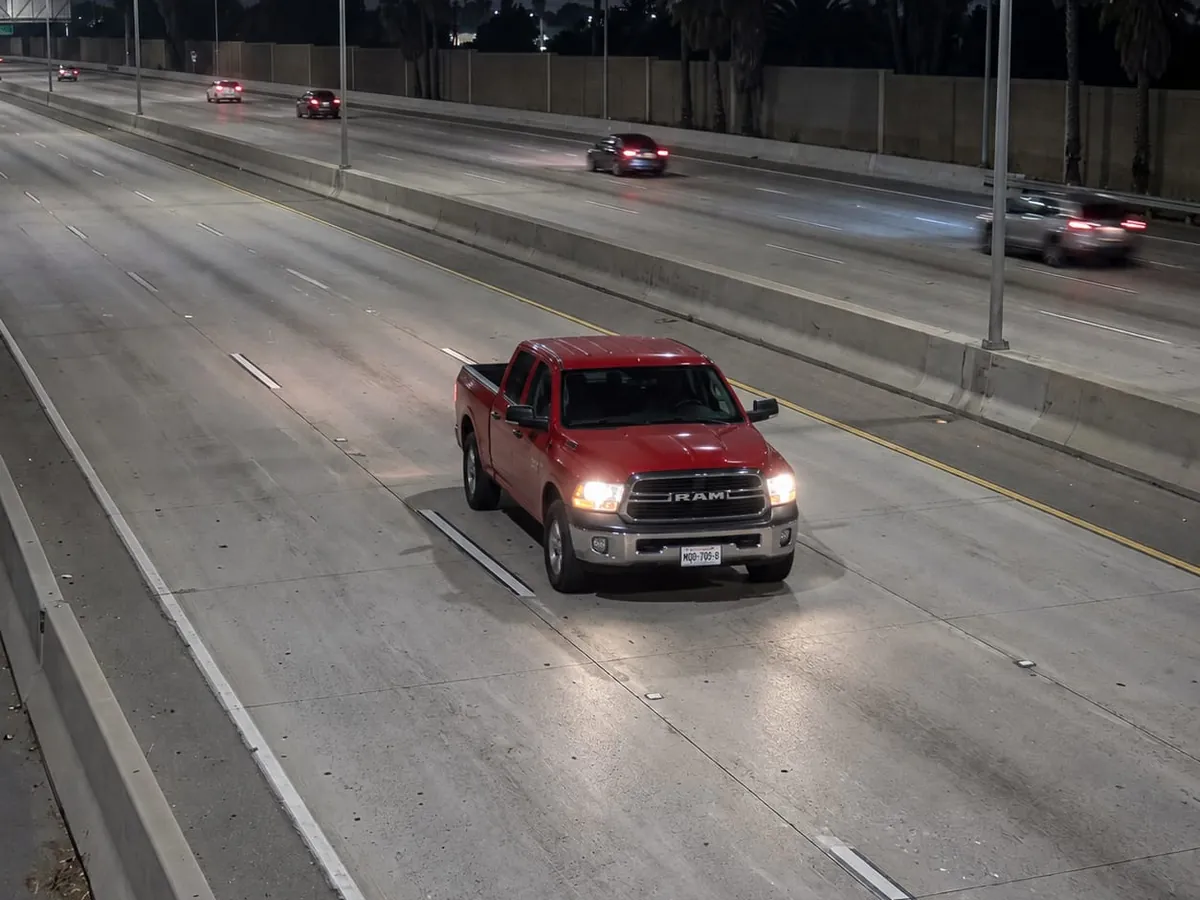
A US freeway camera reading a Mexican plate. Country of issue is a field on the read and a filter over the archive, so "every vehicle on a foreign plate between midnight and 4 a.m." is a query rather than a night of scrubbing.

A Peruvian plate carries the country name across the top of the number. Three letters and three digits look much the same in a dozen countries, which is why country of issue is a field on the record rather than something inferred from the characters.

Thai is one of the hardest scripts in the world for optical character recognition: non-Latin, intricate, tightly spaced and here on a two-line plate the size of a paperback. IREX built the module and had it running in live traffic in eight weeks.

A Kazakh plate and a vehicle the classifier separates into light, medium and heavy duty. That class is what makes weight-restricted and lane-restricted enforcement possible at all, because the rule applies to the category, not to the plate.

An Omani plate, small in the frame and turned off-axis. This is the case the minimum plate size setting exists for: below the pixel width you set, the platform declines the read instead of guessing and the vehicle is still tracked on class and color.

A motorcycle plate is a fraction of the area of a car plate and it is the only durable identifier the vehicle has. On the same read the platform counts the riders and checks for helmets, which is what a multi-rider or no-helmet rule is written against.
See Two-Wheeler Analytics →Ten Classes
Vehicle class is not decoration. It is the filter an investigator searches on when the plate is unknown and the term a lane, weight or corridor restriction is written in. The classifier went from six categories to nine in release 4.37 and gained minivans in 4.39.
In Operation
What lands in the events list is not a plate crop. It is the plate, the make and the color as one row, with the camera that saw it and the time it did, which is what lets a lead survive a witness who remembers the car but only three characters of the number. From that row an operator runs Search by number plate to pull every other camera that saw the same vehicle, or Route to draw its path across the map. Cameras also coordinate across an approach, matching entry and exit points, which is what makes average-speed control and route reconstruction possible in the first place.
See Multi-Camera Object Tracking →
Half the time the plate is the thing you do not have. The vehicle filters answer the description instead: class and color combined with AND, make where brand recognition is switched on, speed band, the watchlist a vehicle sits on and the event name a rule was given. Plate search itself takes wildcards, so three certain characters and two unknown ones is a query. Proprietary descriptor clustering indexes billions of vehicle objects, so the archive answers at the same speed whether the deployment covers a district or a country.

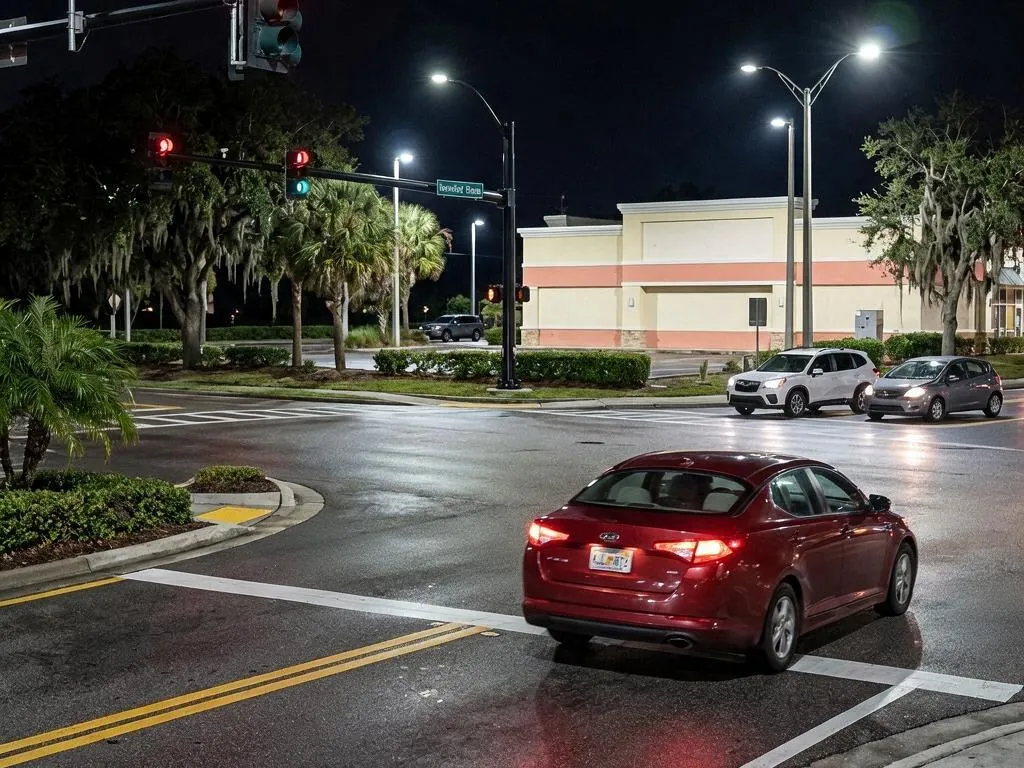
The same read answers a compliance question. Draw a motion control area on the camera, point it at an authorized vehicle dataset and every plate crossing it is checked against the record: in California that is the DMV registration and whether the annual fee has been paid and a vehicle whose registration has lapsed raises a Registration expired event alongside the other traffic violations. Elsewhere the same mechanism carries a liability-insurance check or an annual inspection certificate. You name the check area and the violation type in your own words, because the requirement differs by state and by country.
Compliance Checks
Enforcing the paperwork a vehicle is supposed to carry is one of the few things a law enforcement license plate reader does that pays for itself. Here is exactly what the platform does and what it deliberately does not do.
The Vehicle Database
A police license plate reader is only as useful as the list it reads against. The vehicle database runs on the same machinery as the person database, with the same access model and the same Case ID gate, because tracking a vehicle is tracking whoever is driving it.
Vehicles are enrolled onto named lists: a stolen-vehicle list, a permit roster, a case list. Match priority and the user groups allowed to see it are set on the list, not on the vehicle. Recognition mode decides whether it is matched against live video; Archived keeps the record and stops the matching. Access and recognition are separate switches on purpose.
The vehicle record includes the plate number, country code, owner’s name, the list where the vehicle is registered and a photograph of the vehicle. When available, it also includes make, model, body type, color, year, VIN and the registration document. The entry form was cut to the data-minimization requirements of CJIS and GDPR, not to what a database could hold.
Two shapes, for two kinds of source. CSV is the fast one: semicolon-separated, one line per vehicle as PlateNumber;
The same shape in reverse: a TAR archive of the photographs and a plates.json of the records, carrying the database id, the list id and an image hash on every entry. Migration, handover to another agency and proving what a list held on a given day all rest on it. A watchlist you cannot get back out is one you cannot account for.
A monitor is a set of cameras, the CarTrack Pro Match event and a list. After that the list works without anyone watching a wall. The alarm opens with the plate photo, the camera and its map location, the timestamp and live video and verification is required before anyone acts. A line drawn in front of a barrier turns the same match into an access decision.
Some rules are about which vehicles belong somewhere rather than which vehicle did something. Release 4.38 added plate number templates: a violation rule on a road segment names the vehicle lists and plate patterns permitted there and anything else in that lane is an exception with evidence attached.
The platform will not run a vehicle search, or accept an enrollment, edit, import or export, without a Case ID recording the lawful grounds. The log entry keeps the user name and IP, the subject searched, the referenced document id and the timestamp, appended where nobody can edit it. Since release 4.38 the Logbook exports to CSV for auditors and each download is itself logged, the part most systems leave out.
Keep Reading
Pick the approach with the bad angle and the low light. That is the one worth measuring in a pilot.
Not for general plate reading and vehicle search: existing ONVIF Profile S cameras meeting the platform baseline work. What matters is pixels on the plate, not the label on the camera. The published figures are roughly 25 px per meter in the region of interest to detect a vehicle and 250 px per meter to read its plate, a plate image at least 80 px wide and preferably 125 and a mount 2 to 6 meters up with the tilt inside 0° to 20° for plate reading. Traffic-violation enforcement is stricter again, because a citation has to survive challenge and IREX publishes an installation specification per violation type.
A regional model is selected per camera and search covers single and double-line plates in normal, inverted and custom styles, with the country of issue held on the record. The supported list grows every release: 4.33 alone added Gibraltar, Iceland, Bosnia and Herzegovina and more than ten other national formats and improved Mongolian plates. If your format is not covered yet, that is a training job rather than a redesign. Thai, one of the hardest scripts in the world for optical character recognition, went from a standing start to live traffic in eight weeks.
Yes and two-wheelers are their own vehicle class rather than a car that came out small, which is what releases 4.36 and 4.37 changed. Motorcycle plates are a fraction of the area of a car plate, so the minimum plate size setting matters more here than anywhere: set the pixel width below which the platform should decline the read rather than guess. On the same pass the module counts the riders and detects helmets, which is what multi-rider and no-helmet rules are written against and the Motorcyclists filter returns those events on their own.
Search returns matches for partial plates and incorrect characters, with wildcard conventions for the positions you are unsure of and release 4.33 specifically improved reading of plates obscured by snow, mud, or tape and cut false positives by classifying text that is not a plate as not a plate. Where the plate genuinely cannot be read, the platform says so with an Invalid license plate or License plate is missing event and the vehicle class, color and make give a second route to the same vehicle.
Through integration with the databases your agency already relies on. Stolen-vehicle checks run against your law-enforcement records; registration, insurance and inspection checks run against DMV registration or another authorized dataset, inside check areas you draw on specific cameras. IREX operates no vehicle register of its own, so the endpoints and the access are agreed during the design phase and provided by you. Every failed check raises an event for a person to verify; the platform issues nothing by itself.
Yes, either as a semicolon-separated CSV of PlateNumber;
It is the software half of one. IREX is LPR software that runs on the fixed and PTZ cameras a city or an agency already owns: the standard deployment connects the existing ONVIF or RTSP fleet without replacing camera hardware, so there is no IREX plate-reader camera, no roadside appliance and no box per lane. What the platform needs is pixels on the plate. That means roughly 250 px per meter inside the region of interest, a plate image at least 80 px wide and a mount 2 to 6 meters up with the tilt inside 0° to 20°. A site survey confirms each camera against the module it will run and traffic-violation enforcement is stricter again, because a citation has to survive challenge. ALPR is the US name for it; British and Irish agencies call the same technology ANPR and it is the same module either way.
No. IREX sells no cameras of any kind and there is no in-car, trailer or body-mounted product on this page: CarTrack Pro documents a fixed or PTZ mount, 2 to 6 meters above the ground for plate reading, with the tilt between 0° and 20°, the pan within ±20° and the roll within ±5°. What IREX supplies is the analytics that turn a camera your agency already owns into an automatic license plate reader, together with the vehicle database, the search and the audit trail behind it. A vehicle-mounted reader program is a separate thing from what is documented here.
The ones your agency already relies on, because IREX operates no vehicle register of its own. The platform integrates with external law-enforcement databases to detect stolen, uninsured and unregistered vehicles and release 4.26 added checks against an external technical-allowance database, which is the annual safety or emissions certificate in the jurisdictions that require one. Alongside those, every read is matched against your own vehicle lists: a stolen-vehicle list, a permit roster, a case list. Where the hit then goes has the same shape of answer. Alerts are delivered through real-time crime centers and 911 dispatch centers as well as the Sover secure messenger and an alarm monitor can push any event and its frames to a third-party system over a webhook. The endpoints and the access are agreed during the design phase, not assumed.
IREX does not publish a price and a per-camera license number quoted on its own would mislead rather than help: it is a minority of what a program actually costs and it says nothing about the camera network the program has to cover. Pricing is quoted per deployment, covering the system, the support and the services around it and presented as a three-year total cost of ownership against your current stack. The scope turns on camera count, the mix of modules, the retention period and whether you host the instance yourself. The four commercial models are set out on How to Buy and a pilot is scoped before any of them.
The reads are yours. Video, events, logs and watchlists are owned exclusively by the customer and IREX neither owns them nor has access to them, because the instance runs on your infrastructure under your access controls. Every search, enrollment, edit, import and export runs under a Case ID recording the lawful grounds and the log entry keeps the user name and IP, the subject, the referenced document id and the timestamp, appended where nobody can edit it; since release 4.38 the Logbook exports to CSV for auditors and each download is itself logged. Retention is configured by you as the controller: the architecture is documented to scale to a one-year retention period, which is a capacity ceiling rather than a service inclusion or a default. And the compliance checks run only inside the areas you draw on specific cameras, which is what keeps a plate program from turning into a general vehicle-movement register.
No. The same read serves anyone whose problem is a vehicle: traffic authorities running citywide enforcement and average-speed corridors, parking operators gating a barrier on a permitted-vehicle list and casinos reading the valet lane and the self-park entrance. Law enforcement is the demanding case because a hit there has to carry its evidence and its lawful basis with it, not because the module is any different.
That is the right question and the honest answer is that we measure it rather than quote it. IREX does not publish per-module accuracy figures, because a number from another city’s cameras tells you very little about yours. Accuracy is benchmarked on your own feeds during the pilot, against two or three success criteria agreed in writing before it starts and the measured numbers are what go into the contract.
Any camera that supports ONVIF or streams RTSP with H.264 or H.265 on a static IP can be connected, but connection is not the bar. Each module sets its own resolution, mount position, height and angle-of-view requirements in the camera requirements, the flagship modules need higher-resolution imagery of the scene than a bare stream and the recommended primary stream is 1920 × 1080 or 1920 × 1440. A site survey confirms every camera against the module it will run.
It runs on its own and alerts a person. Detections are signals for a human to verify: no response runs autonomously and the verification and decision are logged against the same Case ID as the detection.