
Alarm Monitors
Events grouped by camera and type onto the workstations that own them, so a shift sees its own events rather than everything at once.
See Real-Time Alerts & Evidence
Verified alerts, not sixty screens. A crime center fails in one of two ways: analysts cannot watch enough feeds, or nobody can reconstruct afterwards who looked at what. IREX is real-time crime center software built to remove both failure modes at once, on the cameras the center already has.
Three Jobs
Detect and verify. AI monitors all camera feeds simultaneously. A weapon brandished, a watchlist match, a flagged plate: analysts receive the alert with the relevant footage on screen, precise location, timestamp and match confidence. The RTCC video analytics run on every channel at once, which removes manual feed monitoring and the reliance on separate third-party systems for core detection.
Coordinate and respond. One unified operational map, with every agency and authorized role seeing the same verified intelligence. When a pursuit crosses a jurisdictional line, analysts, supervisors and field units share situational awareness, scoped by jurisdiction and role so data privacy survives the coordination.
Review and account. Every query, camera view and alert is logged automatically with operator identity and timestamp. Accountability is the part of real-time crime center technology that usually gets bolted on afterwards and here it is enforced by system design rather than by department policy. Partners report an operator span of 1,000+ cameras and a 10x or better response-time reduction against manual monitoring and citizen-report workflows.
What an Analyst Gets
Events grouped by camera and type onto the workstations that own them, so a shift sees its own events rather than everything at once.
See Real-Time Alerts & Evidence →The whole camera network on a multi-layered map with floor plans, snapshot preview, instant playback and tracking without leaving the view.
See Global Map & Floor Plans →Search people, vehicles and events across the archive by map, filter, or plain language, then follow the subject camera to camera.
See Ask IREX & Video Search →Alerts and evidence to and from officers through the Sover secure messenger, with natural-language queries back to the platform.
See Sover Communications →Case ID on every privacy-sensitive action, append-only logging, daily signed exports and evidence packages assembled automatically.
See Ethical AI & Case ID →Continuous export to Apache Superset: heatmaps, suspect analytics by location and time and compliance auditing of analytics usage.
See the Apache Superset Integration ↗On the Video Wall
Three unrelated events, three cameras, one shift. The argument for the center is that all three arrive as alerts with the frame attached, rather than waiting on an RTCC video wall for somebody to happen to look.

Two riders, one plate, one moment. The detector reads the pattern rather than the crime, which is what lets an alert arrive while a patrol can still act on it.
See Two-Wheeler Analytics →
A stopped vehicle on a live roadway is a road-safety problem measured in minutes. The center sees it on the camera that was already pointing at it.
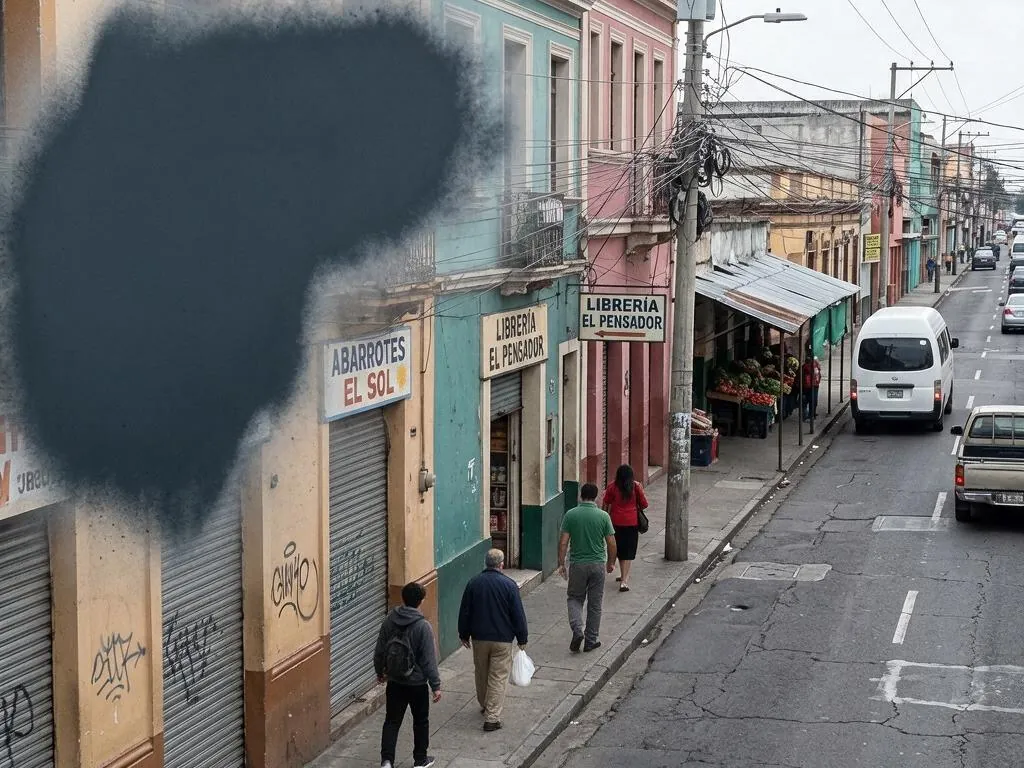
Camera health is part of RTCC camera integration: a lens sprayed, knocked out of focus or turned to face a wall raises an alert like any other event. A blinded camera is not a gap somebody discovers three weeks later during an investigation.
See Camera Tamper Detection →On the Wall
Four of the things a center is watching for and the pages that explain how each one is detected.
The call that cannot wait for somebody to notice a screen. A brandished firearm, a gunshot, a scream or breaking glass reaches the console with the frame attached.
Read More →Suspects and persons of interest your agency enrolled, matched as they pass a connected camera. Nobody who is not on a list is recognized.
Read More →A vehicle checked against stolen, uninsured and unregistered records as it passes and a route reconstructed across the camera network once it matters.
Read More →The search that starts on a phone call and has to run across every camera at once, with the lawful grounds recorded before it does.
Read More →Keep Reading
The console is where this is won or lost. A pilot puts your own feeds and your own watchlists in front of the people who will use it.
It replaces the patchwork used for core threat detection and investigation and it consolidates video management, analytics, search, alerting and audit into one RTCC platform under one SLA. Integration with your law-enforcement databases and dispatch workflow is scoped during design.
Through hierarchical role-based access. Each group is granted specific cameras, watchlists, locations and monitors and a user can hold a different role in each group, so a neighboring agency sees what it is entitled to and nothing more. Every access is logged.
The platform produces the chain-of-custody documentation courts ask for: every query, view and alert logged with operator identity and timestamp, evidence packages assembled automatically and daily signed exports. Admissibility itself is a matter for your jurisdiction and prosecutors and Case ID policy detail varies by agency.
No. There is no IREX camera to buy: RTCC camera integration runs on the fleet a city, transit agency, school district or private partner already operates. Any camera that supports ONVIF or streams RTSP with H.264 or H.265 on a static IP can be connected and each module then sets its own resolution, mount and field-of-view requirements, which a site survey confirms camera by camera. Cameras below that baseline and enforcement use cases with stricter optics, may need replacing and that sits outside the standard scope. Connection is not plug-and-play either: a qualified network engineer configures each camera and router.
Software. A wall of feeds scales with headcount and nothing else, while RTCC software watches every channel at once and hands the operator the events that matter, which is where the reported operator span of 1,000+ cameras comes from. The RTCC video wall can stay: alarm monitors group events by camera and type onto the workstations that own them, so the wall shows what has already been verified instead of being the thing somebody has to watch.
What the platform documents and we will not pad the list. Alerts are delivered through real-time crime centers, 911 dispatch centers and secure messengers. Vehicle checks run against external law-enforcement databases for stolen, uninsured and unregistered vehicles. External devices such as Sigur access control and Netping are managed per user group. And the alarm-monitor webhook pushes any event, with its frame, to any HTTP endpoint, which is the general-purpose way to trigger a third-party system. Named CAD or dispatch product integrations are not documented and neither is operator single sign-on against your identity provider, so both are scoped in the design phase rather than assumed.
One vendor at a time. IREX does not publish an RTCC vendor comparison matrix against a composite competitor that carries every limitation at once, because that framing is misleading. What we do produce is a direct, like-for-like comparison against the specific vendor or shortlist you are evaluating, prepared for that opportunity. One thing we say up front: IREX is not a VMS or an NVR and comparing it with one is not a meaningful test either.
Both labels fit. What a center actually gets is one operational map carrying every camera, floor plan and layer in the deployment, alerts an operator has verified rather than a feed to stare at, multi-tenant access so each agency in a shared center sees only what its jurisdiction entitles it to and a Case ID on every privacy-sensitive action. If your requirement document says police command center software or public safety situational awareness software, that is the same requirement in different words. What none of those labels should imply is autonomy: a person verifies the detection and a person decides the response.
Yes. The platform is multi-tenant by architecture, so a county real-time crime center and the city police, transit and campus agencies inside it can run as tenants of one deployment instead of buying a system each, with a regional or national tier above them where a program has one. Tenancy separates them, the hierarchical group catalog scopes them and the audit log records every access whichever agency made it. A single instance has run 100,000+ cameras in production, so the shared deployment is not the constraint.
With a pilot: one site, three to five use cases, six to twelve weeks and two or three measurable success criteria agreed in writing before it begins. Accuracy is benchmarked on your own cameras and the measured numbers go into the contract.