
Ethical Facial Recognition
Watchlist suspect recognition, attribute search when no photo exists, liveness and anti-spoofing and the missing-persons watchlists run with child-protection partners.
Read More Docs
No other vendor ships this much video intelligence on one platform: the world’s first Vision-Language Model analytics for public safety, the broadest set of specialized high-performance detection modules and a search engine that answers questions across petabytes of video. All of it runs on the cameras you already own, under one contract and one SLA.
Why IREX
IREX calls itself the world’s most powerful video analytics platform and the claim rests on three legs rather than an adjective. The first is StreamVLM™: the world’s first Vision-Language Model analytics for public safety. It turns a sentence into a working detector with no training and no dataset collection, so the number of things the platform can detect is no longer bounded by a catalog.
The second is the broadest set of specialized, high-performance analytics modules on a single platform. Each module is a product in its own right with several detectors inside it. Ethical facial recognition alone covers watchlist matching, attribute search across gender, age band, ethnic appearance, facial hair, glasses, masks and headwear and liveness and anti-spoofing checks. Plates and vehicle attributes, multi-camera traffic enforcement, two-wheelers, weapons, gunshots and other sounds, perimeter, rail and transit, crowds, fire and camera integrity each get the same depth.
The third is a petabyte-scale video search engine. Every detection is indexed as it happens, so an investigator asks a question of the whole archive instead of scrubbing footage. Partners report answers in under a second across petabytes and a 100x or better reduction in investigation time. All three ship together under one contract, one SLA and one upgrade path.
The Three Legs
Every city has a list of conditions no vendor sells a module for: a person lying on the ground, livestock wandering onto a highway, flooding in an underpass, a damaged fence, illegal dumping, graffiti, uncleared snow. StreamVLM™ evaluates live frames against a plain-English prompt and raises an alert like any other event, with multiple prompt-defined detectors per camera, each with its own confidence threshold and cooldown. It is included in the standard IREX price; the only added cost is a GPU node where a deployment needs one.
Explore StreamVLM™ →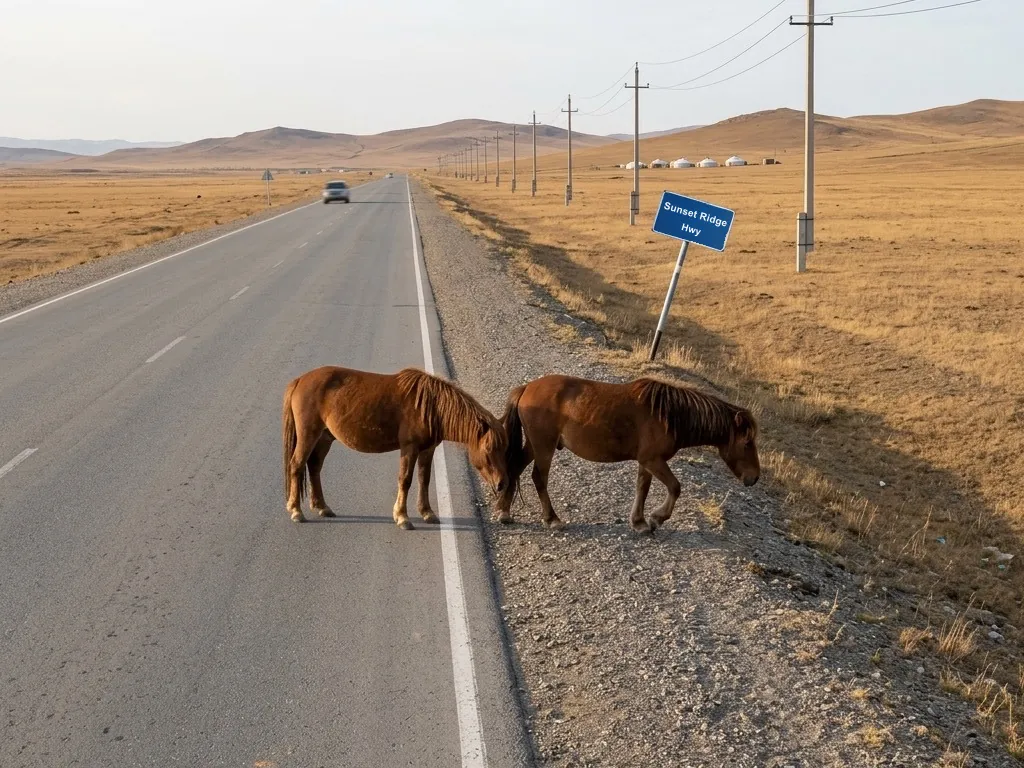
Analytics that only raise alarms leave the archive dark. IREX indexes what every module detects: proprietary descriptor clustering scales to billions of face, figure and vehicle objects and the architecture scales linearly to 1,000,000 cameras and a one-year retention period without re-architecture. Search from the map, from filters on faces, vehicles and plates, or in plain language through Ask IREX, whose agents interpret the intent, check the relevant watchlists and run the multi-step search across the archive. Partners report results in under a second across petabytes, a 100x or better reduction in investigation time and 1,000+ cameras held by a single operator.
See Ask IREX & Video Search →
Cameras that work together see what single cameras cannot. Multi-camera object tracking follows a confirmed person or vehicle camera to camera on the map and on indoor floor plans, forward and backward in time, with every step bound to the same Case ID. Multi-camera traffic analytics coordinates the cameras on an intersection approach, correlates vehicle movement with the signal state and with pedestrians and assembles court-ready evidence for red-light, stop-line, wrong-way, illegal-parking, right-of-way and average-speed violations. In January 2025 it shipped as the world’s first cloud-based multi-camera traffic management system and one city deployment detected 2.3 million violations in a single year.
See Multi-Camera Object Tracking →
The Modules
Every module ships with the platform and modules combine freely on the same camera. Ethical facial recognition runs the missing-persons watchlists IREX maintains with child-protection partners.
Watchlist suspect recognition, attribute search when no photo exists, liveness and anti-spoofing and the missing-persons watchlists run with child-protection partners.
Read More → Docs ↗LPR plus vehicle make, model, color and type, with stolen, uninsured and unregistered detection through external databases.
Read More → Docs ↗Red light, stop line, wrong way, illegal parking, right of way and average-speed enforcement across lanes.
Read More → Docs ↗GunTrack visual weapon detection on existing cameras, with AudioTrack gunshot detection on the same channel, routed in seconds to the people who can respond.
Read More → Docs ↗Motorcycles as their own class: detection and tracking, small plates, rider count, helmet detection, restricted zones and what does not belong in a bike lane.
Read More → Docs ↗AudioTrack on the camera microphone: gunshot, scream, glass breaking and loud sound, so an incident out of frame still raises an alert.
Read More → Docs ↗Appearance-based tracking when the face is occluded, masked, or turned away.
Read More → Docs ↗A route across your camera network on the map and on indoor floor plans, forward and backward in time, under one Case ID.
Read More → Docs ↗People on the tracks or entering a tunnel approach and train surfing, on the cameras a network already runs.
Read More → Docs ↗Real-time dangerous-crowding alerts and precise post-event counting, up to 3,000 people per region.
Read More → Docs ↗Early fire and smoke detection across indoor and outdoor scenes, long before point sensors react.
Read More → Docs ↗Face-based access control at sensitive entry points, with a liveness and spoofing-probability check between a printed photograph and an open door.
Read More → Docs ↗ObjectTrack Pro finds a bag nobody came back for in a crowded concourse, then hands the operator the route to the person who left it.
Read More → Docs ↗Footage from a drone or any other non-fixed source, uploaded and analyzed as a first-class channel: vehicle recognition holds where the standoff angle is shallow and StreamVLM reads the scene either way.
Read More → Docs ↗Line crossing, restricted zones and loitering for people and vehicles, classified before the alert is raised, on fence lines that run for kilometers.
Read More → Docs ↗A condition written in plain English becomes a working detector, with no dataset and no training cycle.
Read More → Docs ↗The watchlists IREX runs with child-protection partners, on the same recognition, attribute-search and tracking modules.
Read More → Docs ↗TamperTrack watches the cameras themselves: signal loss, a low frame rate, a shifted view, an obstructed, dirty or defocused lens, a scene too bright or too dark, each alarmed per camera before anyone needs the footage.
Read More → Docs ↗How Modules Are Used
Every module on this page works in both modes at once. The same detection that raises an alert in the control room is indexed for the investigator who comes looking a week later.

Every module raises events as they happen: a watchlist match, a weapon, a person on the tracks, a plate of interest, a StreamVLM™ condition. Alerts reach the people you nominate through real-time crime centers, 911 and dispatch workflows and the Sover secure messenger, with the triggering frame, the camera and the map location attached, for a person to verify.
See Real-Time Alerts & Evidence →
The same detections are indexed the moment they happen, so every module also becomes a way to search the archive: find every appearance of a face, a vehicle, or a plate, filter on attributes, or describe what you are looking for in plain language and let Ask IREX run the multi-step investigation. Events also export continuously to dashboards for heatmaps, trends and compliance auditing.
See Ask IREX & Video Search →Hardware
Every module runs on standard, commercially available servers on the IREX Private Cloud: bare metal, VMs, private or hybrid cloud. No proprietary appliance.
The proprietary Synet inference framework runs most modules in real time on standard CPUs, so a deployment can start on the servers you already own.
StreamVLM™ requires an NVIDIA GPU node for VLM inference. Weapon detection runs on CPU with limited performance, so a GPU is strongly recommended for it. IREX engineering sizes the mix per deployment.
Works with any camera that supports ONVIF or streams RTSP with H.264 or H.265. Resolution and placement are set per module and traffic enforcement has its own installation specification per violation type.
See Camera Requirements →Ethical AI
Every module on this page runs inside the IREX Ethical AI framework: six pillars of Transparency by Design and a mandatory Case ID on every high-risk action.
Keep Reading
A pilot runs the modules you care about on your footage, with success criteria agreed in writing before it starts. Bring a case you already solved and time it.
Because of three things that ship together nowhere else: the world’s first Vision-Language Model analytics for public safety (StreamVLM™), the broadest set of specialized high-performance analytics modules on one platform and a petabyte-scale search engine over everything those modules detect. The proof points behind each leg are on this page and every one of them is measured on your own cameras during a pilot.
No. Every analytics module ships with the platform under one contract, one SLA and one upgrade path, with no per-feature fee. StreamVLM™ and Ask IREX are included in the standard price as well; the only additional cost is a GPU node where a deployment requires one.
Yes and since version 4.38 it is the documented way the platform runs rather than a special case: several modules and detectors work on one camera at the same time, with no extra hardware and no duplicated video streams. Face recognition, object tracking and traffic monitoring can run on the same channel, which widens coverage without adding cameras and keeps GPU and bandwidth use efficient. The number of active AI modules is also one of the dimensions the platform scales linearly across. When an operator switches an extra module on, the platform lists the modules already active on that camera and asks for confirmation before it starts: the procedure is on the module compatibility page.
Most modules run on CPU through the proprietary Synet inference framework. StreamVLM™ requires a GPU node and a GPU is strongly recommended for weapon detection, which runs on CPU with limited performance. IREX engineering sizes the CPU and GPU mix per deployment against camera count, module mix, retention and the servers you already own.
The face recognition engine is trained on a proprietary 40-million-image dataset optimized for real-world CCTV and was ranked #1 in accuracy among US companies and top 10 globally in the 2021 NIST Face Recognition Vendor Test on the datasets closest to street-camera conditions. IREX publishes no other per-module figure: in every deployment, accuracy is benchmarked on your own cameras during a pilot and the measured numbers go into the contract.
It varies by module and by violation type. Any camera that supports ONVIF or streams RTSP with H.264 or H.265 can be connected, but facial recognition, weapon detection and StreamVLM™ need higher-resolution imagery of the scene than a bare connection and traffic enforcement has its own installation specification. Per-module mount, angle and resolution requirements are published in the camera requirements and a site survey confirms them before deployment.