
Camera Placement
Use a fixed view of the vehicle approach and complete crossing. Check lighting, scale and occlusion on site.

Pedestrian Near Miss Detection brings a vehicle passing close to a pedestrian at a crossing without visible contact to an operator for review.
The Visible Condition
The observable condition is a vehicle passing close to a pedestrian at a crossing without visible contact at a marked urban crossing. A frame can bring the scene to an operator. It cannot establish intent, cause, or the right response.
A near miss is a relationship between a vehicle path and a pedestrian path. The Dallas set shows a turning pickup, a vehicle in a wider arterial view and an SUV stopped across the crossing. Reviewers need the approach and crossing sequence; an isolated vehicle crop is insufficient.
An authorized operator can enter a plain-language prompt such as “Alert when a vehicle fails to yield to a pedestrian at this crossing.” StreamVLM™ evaluates sampled live frames from selected cameras against it. A match enters the IREX event flow.
Each detector has its own confidence threshold and alert cooldown. The team tests wording and settings on its cameras.
StreamVLM™ evaluates sampled frames, so a brief action can fall between samples. Test the actual camera view and response timing before relying on this prompt for an urgent event.
This prompt can be evaluated alongside the Multi-Camera Traffic Analytics trained module. Compare their frame-rate needs and operational fit during a site-specific pilot.
Explore StreamVLM™ →Operational Fit
Use a fixed view of the vehicle approach and complete crossing. Check lighting, scale and occlusion on site.
The reviewer should check pedestrian movement and vehicle path for traffic-safety follow-up. The prompt does not decide this automatically.
Check for perspective, a pedestrian waiting at the curb, or a safe pass. Tune camera selection and alert settings during a pilot.
Illustrative Camera Frames
Synthetic frames illustrate possible matches. They are not real incidents, deployments, or accuracy evidence.
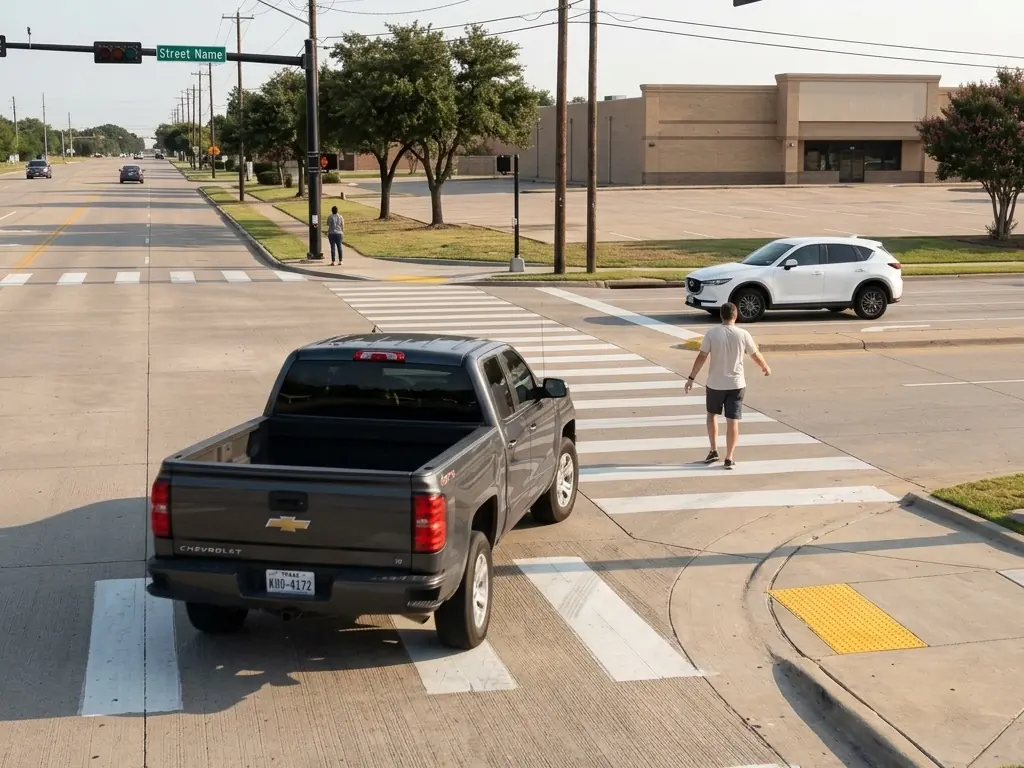
The pickup turns across marked bars near a pedestrian. Review the approach and separation in the clip.
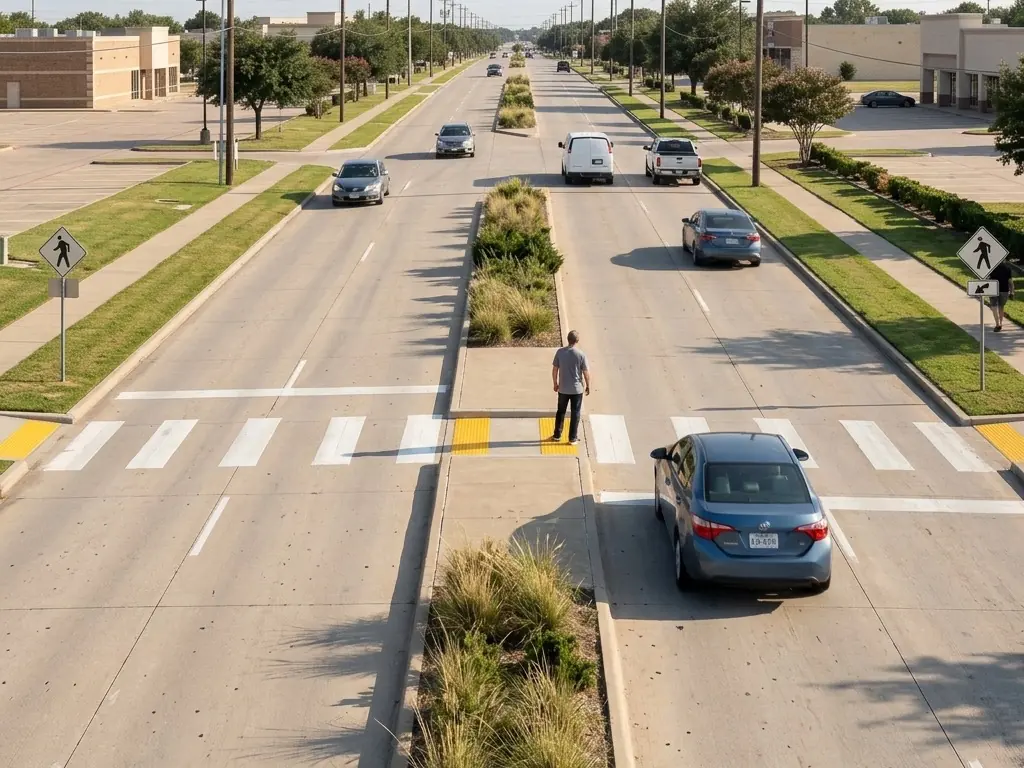
A sedan crosses the marked area in a wider view that shows how vehicle and pedestrian paths meet.
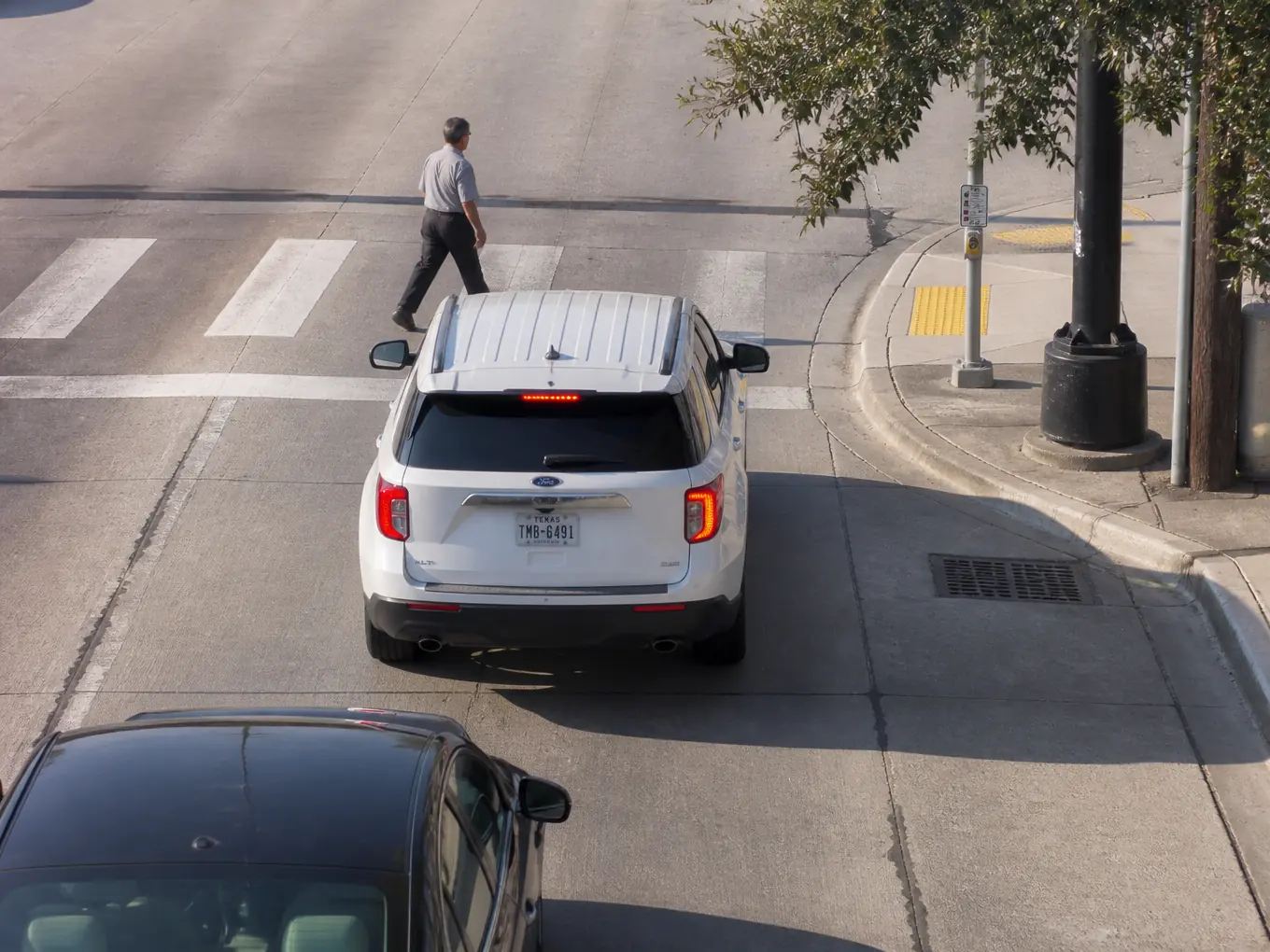
An SUV stands across much of the crossing. Review its earlier movement before judging the interaction.
From Prompt to Action
Use observable wording such as “Alert when a vehicle fails to yield to a pedestrian at this crossing.” on cameras that show the complete relevant scene.
Open the match and surrounding footage. Compare with ordinary scenes such as perspective, a pedestrian waiting at the curb, or a safe pass.
Traffic staff review the clip under local rules. The prompt does not automatically establish fault or a collision.
Pilot Questions
Keep Reading
Choose representative views of a marked urban crossing. We can scope the prompt, alert settings and review procedure for a pilot.
It reports a match to a described visible condition: a vehicle passing close to a pedestrian at a crossing without visible contact. An operator reviews footage before deciding what happened.
No. A sampled frame cannot establish intent, authorization, responsibility, or cause. Staff check context and follow local procedure.
No. Staff review the movement sequence and applicable local rules. The prompt is an alert for review, not an automatic fault finding.
Test representative cameras and ordinary scenes, including perspective, a pedestrian waiting at the curb, or a safe pass. Agree on useful alerts and missed events. IREX does not publish a universal accuracy figure for this prompt.