
Camera Placement
Use an elevated fixed view of the whole queue and exit path. Check lighting, scale and occlusion on site.

Crowd Density Detection brings a dense crowd accumulating at a gate or platform approach to an operator for review.
The Visible Condition
The observable condition is a dense crowd accumulating at a gate or platform approach at a stadium entrance or transit approach. A frame can bring the scene to an operator. It cannot establish intent, cause, or the right response.
The São Paulo set moves from a dense turnstile band to a narrowing ramp and then a closed gate. Density is not uniform across each view. Stewards need to see where movement slows and whether people have a route out, rather than treating every queue as dangerous.
An authorized operator can enter a plain-language prompt such as “Alert when crowding builds at the stadium gate before kickoff.” StreamVLM™ evaluates sampled live frames from selected cameras against it. A match enters the IREX event flow.
Each detector has its own confidence threshold and alert cooldown. The team tests wording and settings on its cameras.
This prompt can be evaluated alongside the Crowd Management trained module. Compare their frame-rate needs and operational fit during a site-specific pilot.
Explore StreamVLM™ →Operational Fit
Use an elevated fixed view of the whole queue and exit path. Check lighting, scale and occlusion on site.
The reviewer should check flow and decide whether stewards should manage the queue. The prompt does not decide this automatically.
Check for an orderly scheduled queue or perspective that compresses spacing. Tune camera selection and alert settings during a pilot.
Illustrative Camera Frames
Synthetic frames illustrate possible matches. They are not real incidents, deployments, or accuracy evidence.
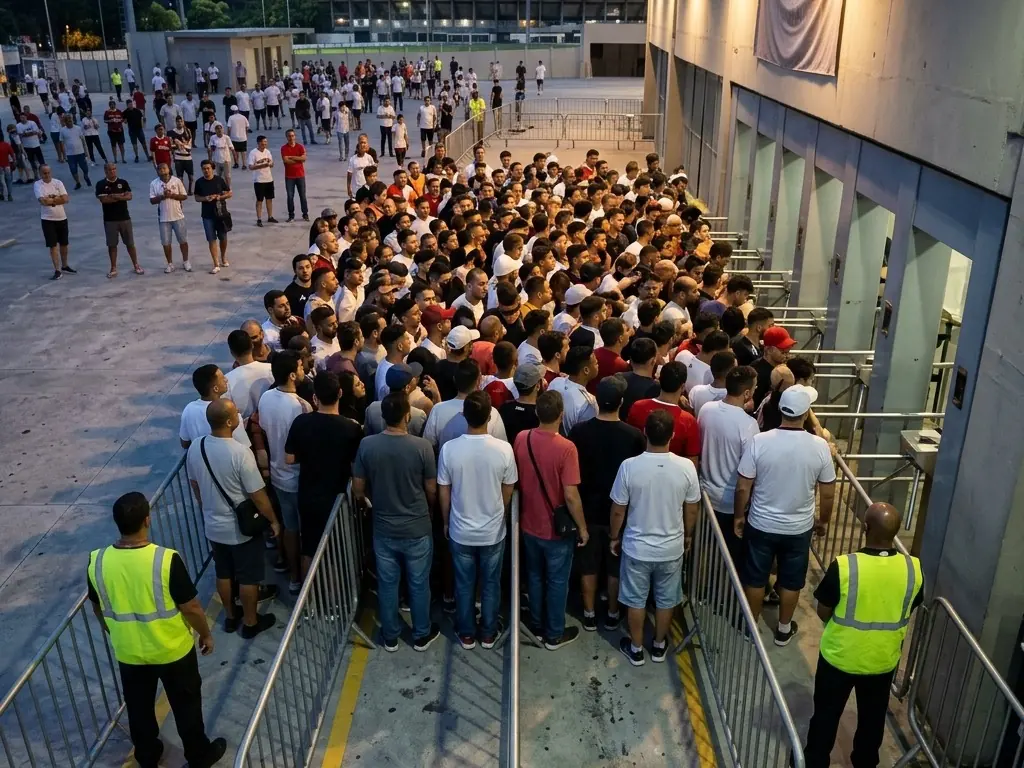
The band at the turnstiles is tightly packed while people farther back have more space.
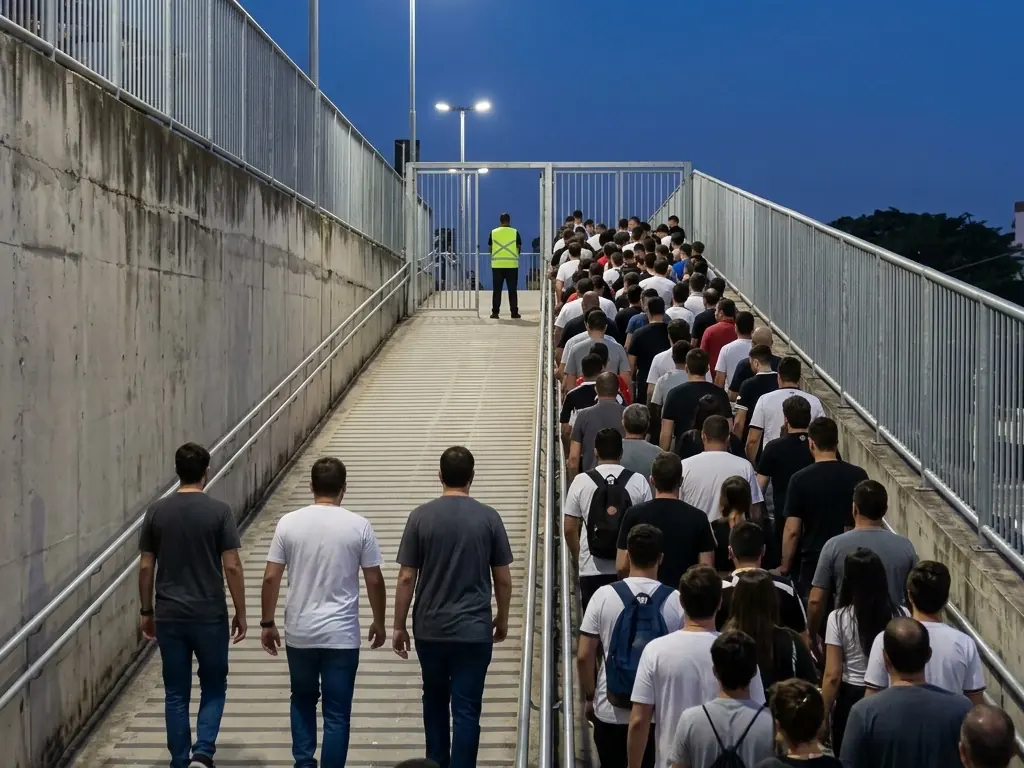
The queue moves loosely at the bottom but becomes dense where railings narrow near the gate.
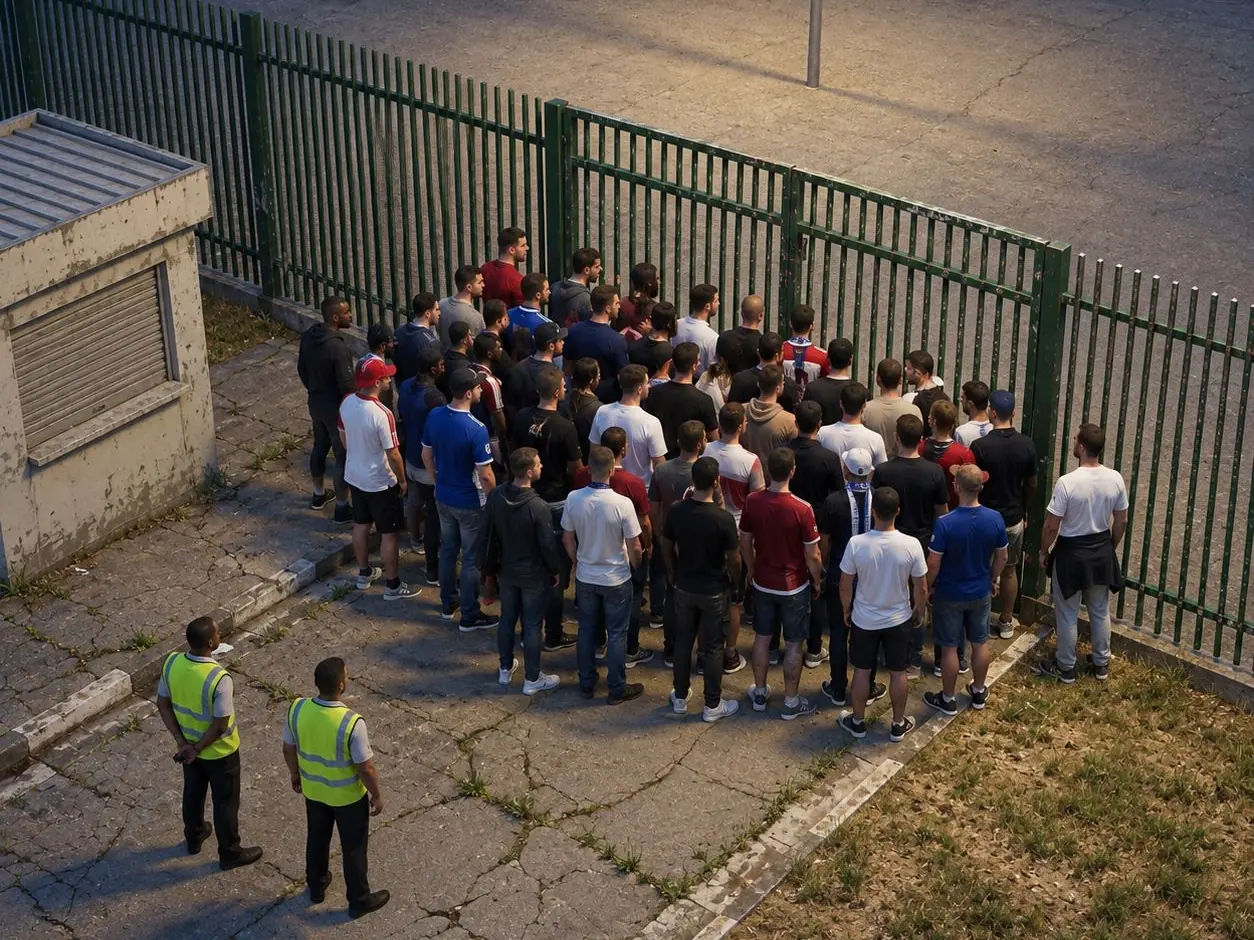
Supporters stand several deep against the gate and adjacent fence, with density falling away behind.
From Prompt to Action
Use observable wording such as “Alert when crowding builds at the stadium gate before kickoff.” on cameras that show the complete relevant scene.
Open the match and surrounding footage. Compare with ordinary scenes such as an orderly scheduled queue or perspective that compresses spacing.
Venue staff check movement, capacity and on-site conditions. A frame alone cannot predict a crush.
Pilot Questions
Keep Reading
Choose representative views of a stadium entrance or transit approach. We can scope the prompt, alert settings and review procedure for a pilot.
It reports a match to a described visible condition: a dense crowd accumulating at a gate or platform approach. An operator reviews footage before deciding what happened.
No. A sampled frame cannot establish intent, authorization, responsibility, or cause. Staff check context and follow local procedure.
No. It shows visible density at that moment. Staff assess movement, capacity, gate status and conditions on site.
Test representative cameras and ordinary scenes, including an orderly scheduled queue or perspective that compresses spacing. Agree on useful alerts and missed events. IREX does not publish a universal accuracy figure for this prompt.