
IREX Centers on Accountability and Access Control in Version 4.40
IREX 4.40 requires a Case ID for every Logbook search, adds Resource Groups for user-group access, and brings Overtaking violations, multiple Alarm Monitor filters, and H.265 playback.
MURRIETA, CA – IREX (IrexAI Inc.), developer of the IREX Ethical AI Platform for public safety, announced the release of version 4.40. The new release gives multi-agency operators one place to manage access, expands traffic enforcement, and extends mandatory Case ID accountability to the platform’s own audit log.
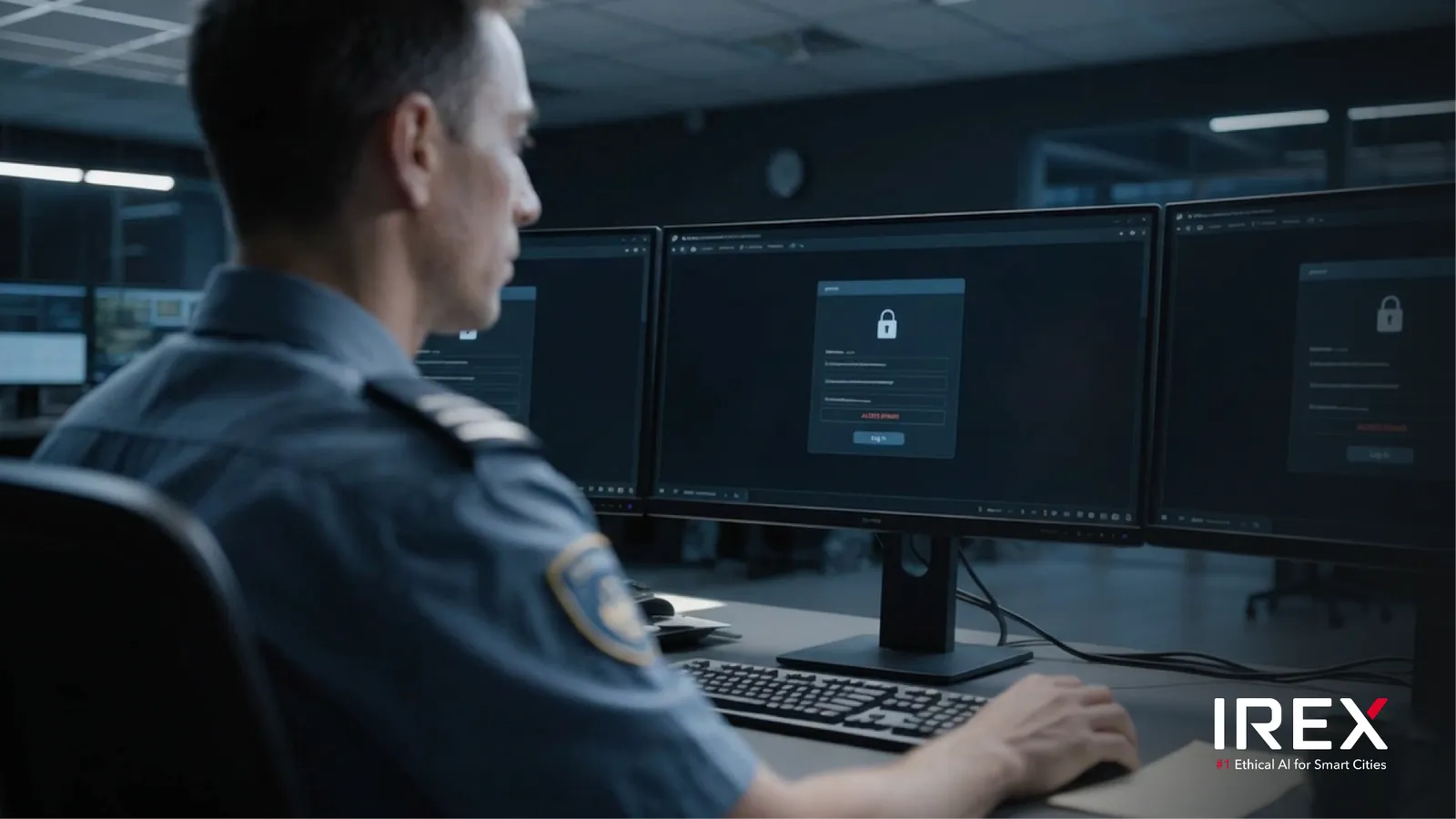
Version 4.40 makes Case ID mandatory to open and search the platform’s Logbook. Every search is now tied to a recorded reason, extending the accountability IREX applies to high-risk actions. The release also features Resource Groups for managing user-group access, detection of Overtaking traffic violations, multiple filters for Alarm Monitors, ONVIF camera archive playback, and H.265 video playback.
What’s New in IREX 4.40
- Simpler access control across teams. A new Resource Groups page, in a new Collaboration section, collects resources of different types, so administrators can grant access to one or more user groups in one place. Before, they assigned resources in each user group separately. Video sources can now be filtered by resource group on the Cameras, Events, and Plans pages, and in Alarm Monitor filter settings.
- Broader traffic enforcement. The Traffic module can now detect Overtaking violations, in addition to driving in the Opposite lane. Improved traffic-light detection now follows a traffic light that has shifted in the frame and keeps recognizing its signals, raising an event when the sections move by more than 70% of their size. An additional check of the “Do not go” light now applies to traffic-light and railroad-crossing violations.
- Better use of existing cameras. For cameras connected through ONVIF devices, operators can now play back the archive stored on the camera itself and switch between the server archive and the camera archive. The platform now supports H.265 video streams.
- Multiple filters on Alarm Monitors. One Alarm Monitor can now hold up to 8 named filters, each with its own criteria. A new Traffic violations category sends traffic alarms to a monitor of their own, because its filters can’t be combined with filters for other event types.
- Accountability for audit-log searches. Case ID is now mandatory to open the Logbook and for every search performed. Case IDs are saved in the Search in logbook entry, so there is a record of why the Logbook was opened and searched. Violation ID has also been added to the Logbook’s additional filters.
- Smarter perimeter and object tracking. ObjectTrack Pro tracking settings have been redesigned so people, vehicles, and abandoned items are each set up separately. A new Perimeter human detection mode spots people at secured sites, even when they are crawling or rolling.
- Performance and usability. GPU-based analytics modules can now split one graphics card across several video streams, and CarTrack Pro now processes video faster on the CPU. Hovering over a camera with video quality issues now shows the issue type, such as “Low frame rate”.
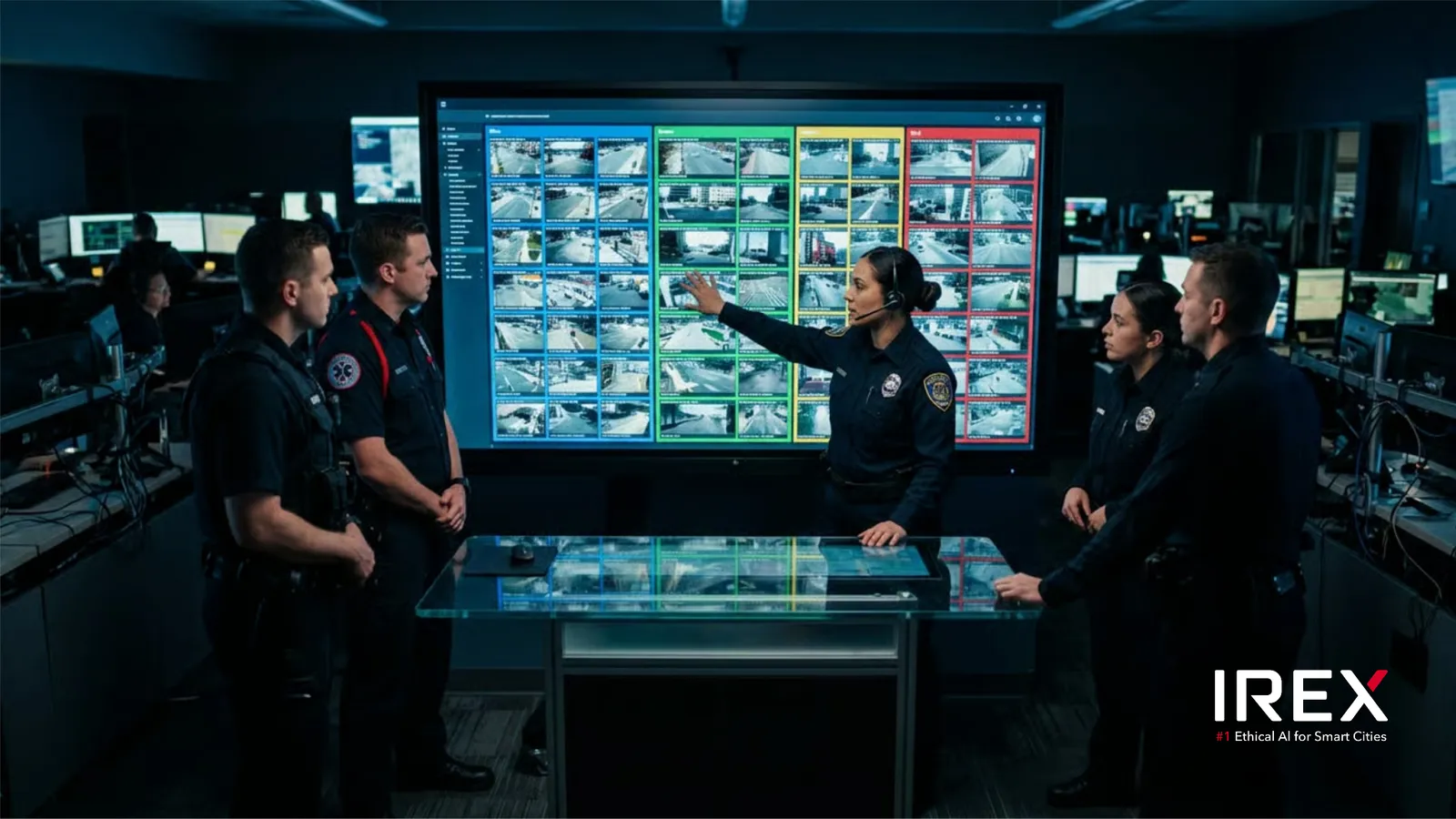
“Agencies running thousands of cameras need two things from a platform: control over who sees what, and a record of why they looked,” said Calvin Yadav, CEO of IREX. “With 4.40, one change to a resource group now reaches every team that needs access. And the audit trail follows the same Case ID rule as every other sensitive action on the platform. That is what ethical AI looks like in daily operations.”
Notes for Existing Customers Upgrading
- The Wrong way violation type is now called Opposite lane. Earlier Wrong way capture settings based on entry and exit lanes no longer apply, so Opposite lane capture must be configured instead.
- Existing layouts are automatically shared with the user groups their creator belongs to.
- H.265 playback requires the latest Google Chrome and a graphics card that supports H.265 decoding. Cameras connected through an ONVIF device play back H.264 only.
The release centers on accountability and access control. Cities and state legislatures are scrutinizing who accesses surveillance data, when, and for what purpose, and 4.40 gives agencies tighter control over the first question and a recorded answer to the last.
The full list of changes is in the IREX 4.40 release notes.