
Persons of Interest: Converting Photos into Facial Images
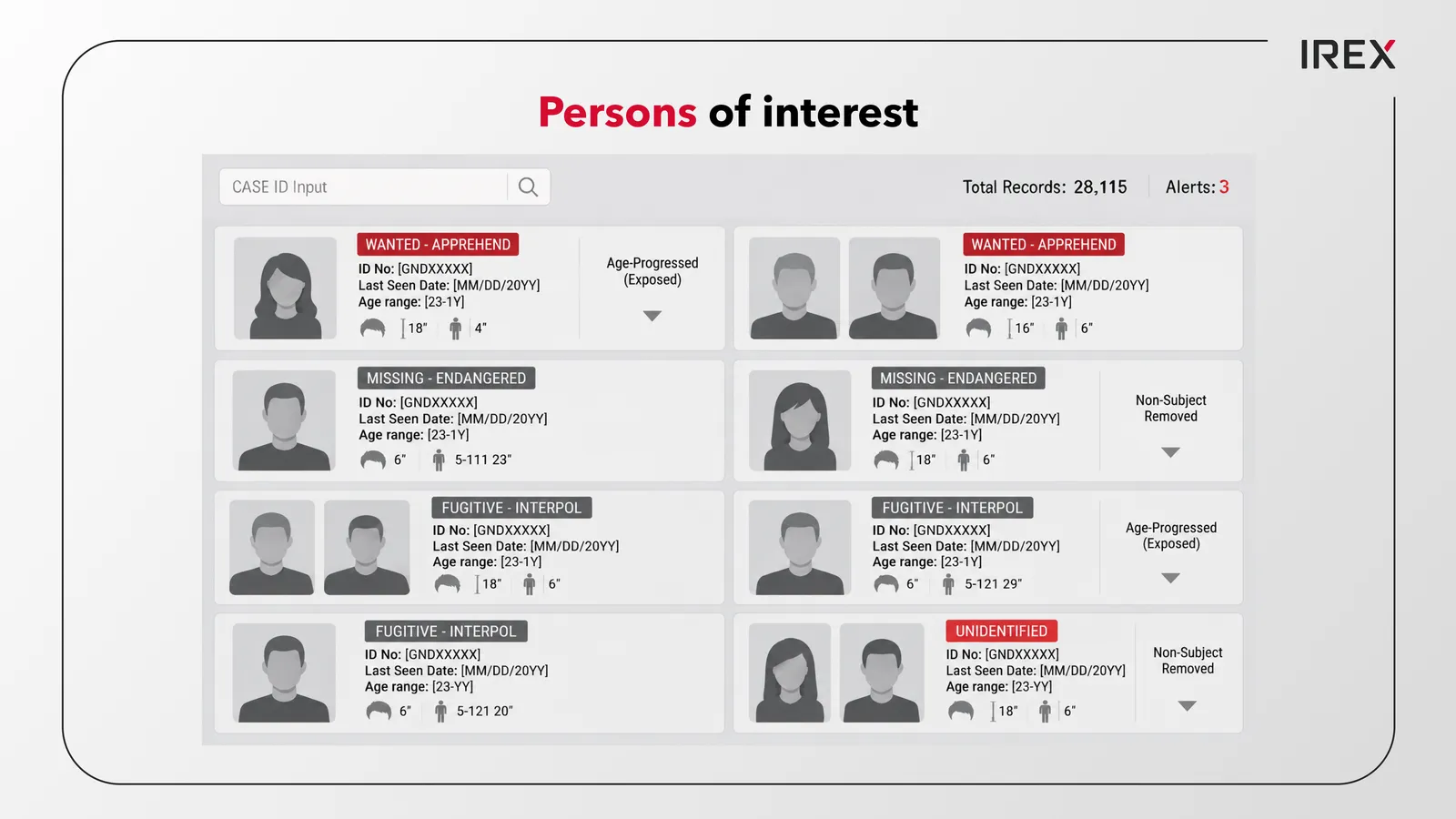
How wanted and missing-person records become a clean, camera-ready dataset, and how Case ID keeps every search tied to a lawful reason.
When someone goes missing, the first hours are the most important. But in public-safety AI video analytics, a search is only as good as the data behind it: a clear photo, an accurate description, a Case ID, and a mechanism to send this information to the people who can act on it. In public safety, this data often comes from the places where it’s needed most: missing-person registries and wanted-criminal databases.
But collecting these images is not as simple as downloading files. Records arrive as ID scans, composite sketches, screenshots, black-and-white printouts, family photos, and age-progressed images. Turning this mixture into a reliable dataset takes filtering, labeling, and careful judgment.
Starting with public records
An effective dataset begins with authoritative records: gathering images from databases, including wanted and missing-person registries. These records are shared through secure police channels and are subject to legal and data-protection laws.
This approach results in a broad collection of records covering wanted criminals and missing people of all ages. But it also presents a major challenge: the data is highly uneven.
Many records, especially for wanted persons, usually contain only one image: a single mugshot, composite sketch, or document scan. This may be enough for a human investigator, but not sufficient for building and testing matching systems. Additionally, even these single images are usually of poor quality, duplicated across records, or embedded in ID documents and screenshots.
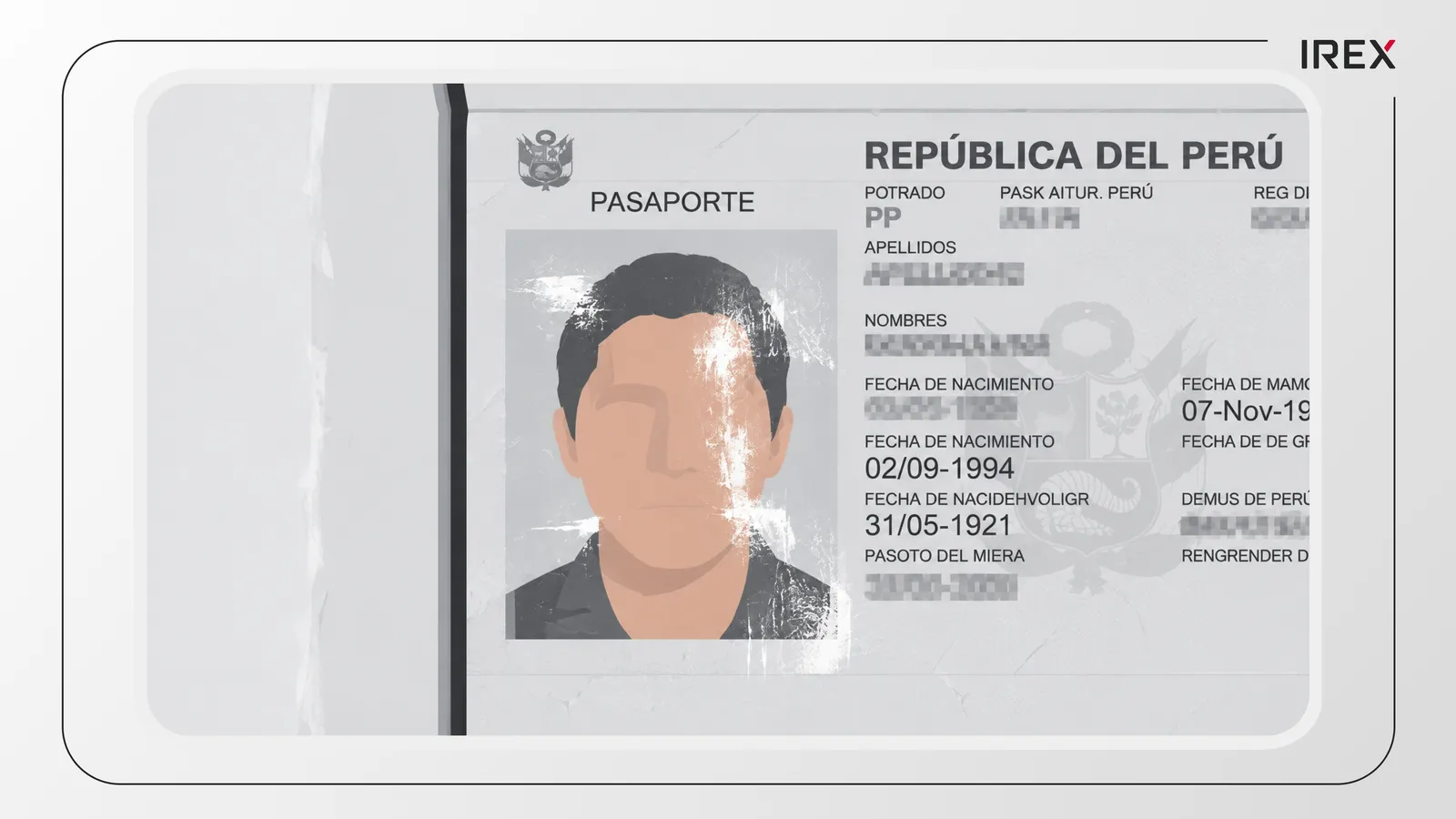
AI tools help detect faces and crop them into a consistent format for later matching, separating actual facial images from document layouts, screenshots, low-resolution scans, and background clutter.
Descriptions matter as much as photos. In real-world camera networks, a person may not face the camera, wear a mask, or may have changed appearance. Attributes such as clothing, hair, or bags can support searches for missing people when a face is not visible.
Filtering out the wrong faces
Missing-child records bring another issue: age-progressed images. These are intentional estimates of what a missing child may look like years later. They are valuable for public appeals, yet they are not actual photos and thus serve no purpose for datasets intended for matching faces.
Family photos create further complications. A record for a missing parent may include a photo of them with their children. If these children are also missing, each child usually has a separate database entry, but the same family photo may appear in all of them.
AI tools help separate the primary subject from relatives and other people in the same frame. After removing duplicates, irrelevant faces, and unusable images, the final dataset contains a far more consistent set of persons of interest and their photos.

Making the data camera-ready
Real surveillance footage rarely looks like a clean database photo. CCTV-derived face crops can be augmented to simulate how images change when printed, scanned, resized, tilted, or photographed from a screen. But not every augmented image is fit for purpose. Heavy blur, noise, and distortion sometimes make faces unrecognizable, and such images are discarded, leaving a smaller dataset with more realistic variation and higher practical value for Ethical AI in public safety.
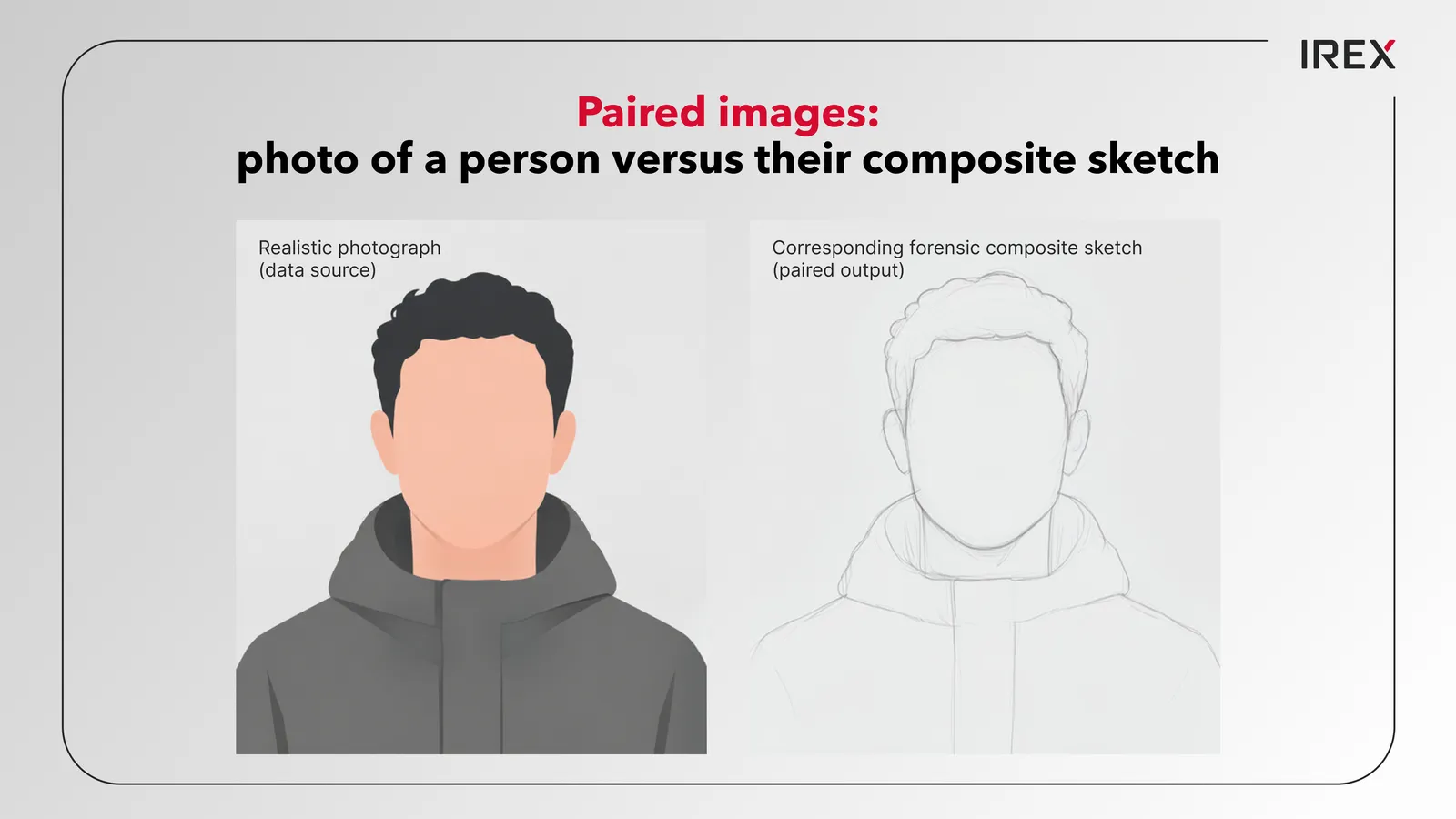
Composite sketches, or identikits, are the hardest part. To train a system to match a sketch with a photo, it needs paired examples: a real photo and the same person’s identikit. But identikits are often created precisely because no usable photo exists. Finding verified pairs manually might yield only a limited number of examples.
Generative AI models are a possible solution. But so far, they tend to produce generic pencil sketches rather than identikits created with specialized forensic software because the models simply lack this kind of training.
Connecting the dataset to action
Facial recognition becomes valuable when it can trigger the right response. Building a wanted and missing persons dataset is ultimately about shortening the distance between a report and a response. For public-safety AI video analytics, every image should depict the right person, reflect a real appearance, and be usable in the conditions where searches actually happen.
Once authorized cases are added, a camera network or search platform can compare incoming sightings against the pre-loaded watchlist. If there is a possible match, the system will then alert dedicated responders with the camera location, image frame, and Case ID, enabling a human operator to verify it.
IREX builds privacy into the structure
Missing-person and wanted-person data is sensitive. The IREX platform limits access strictly to authorized users, and every search or watchlist action must be tied to a lawful reason, such as a police case file, court order, or missing-person report.
IREX requires a mandatory Case ID prior to conducting privacy-sensitive actions and restricts facial recognition exclusively to pre-registered individuals.