
Buckle up: Real-Time AI Monitoring for Seat Belt Compliance
Every day, millions of people get behind the wheel or hop as passengers into a car without thinking twice about one simple action: fastening their seat belt. Yet, wearing a seat belt remains the simple and most effective way to survive a road crash or reduce the risk of severe injury. In the U.S., nearly half of all people killed in passenger‑vehicle crashes in recent years were not fastened up. Still, drivers and passengers continue to travel without a seat belt, particularly on short journeys or in familiar areas.
What seat belts actually do
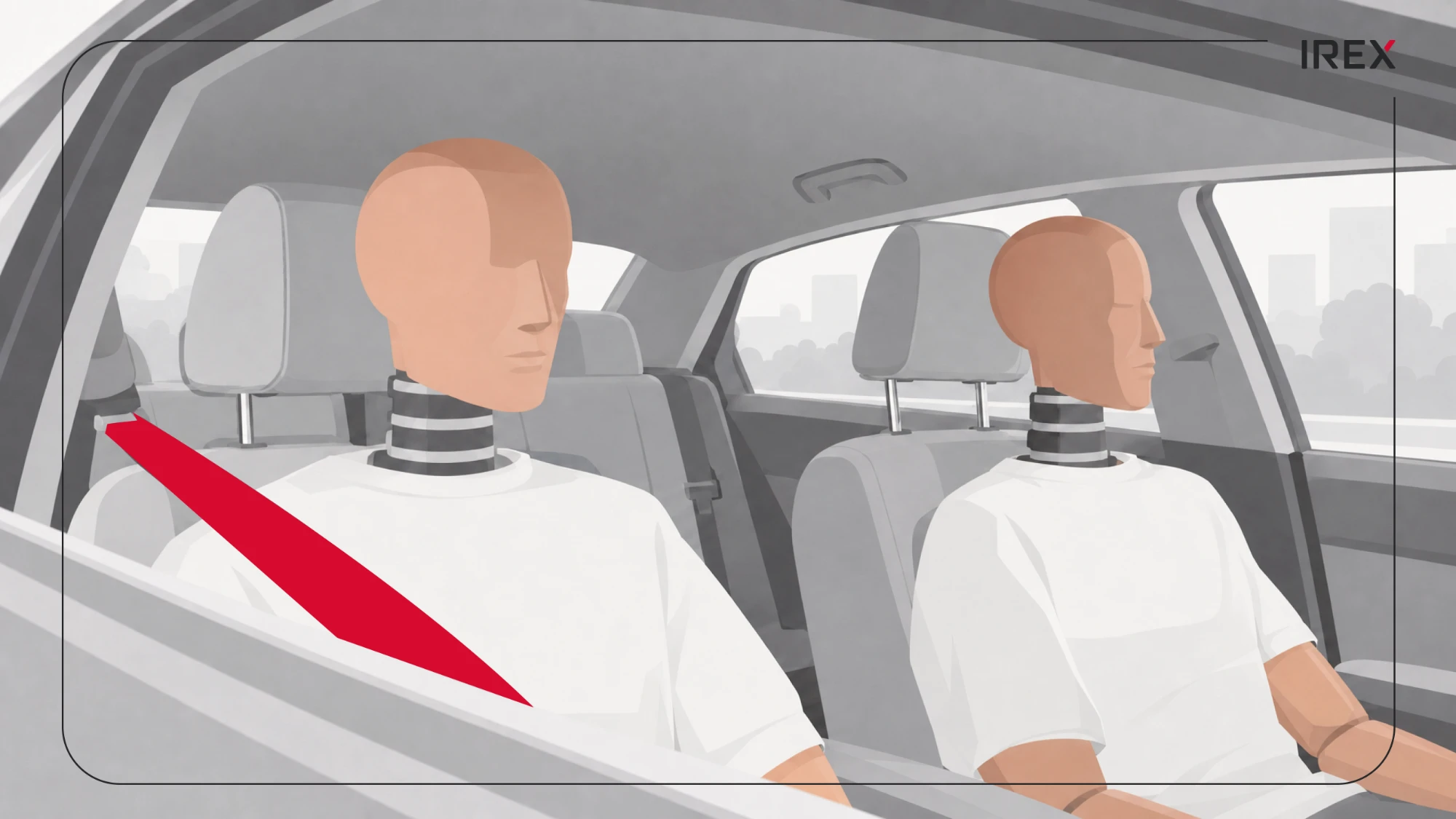
In a collision, your body wants to keep moving at the vehicle’s pre‑crash speed. A seat belt spreads crash forces across the stronger parts of your body - pelvis and chest - and keeps you from hitting the interior, other passengers, or being ejected. Ejection dramatically increases the chance of death, since restrained car occupants are far less likely to be thrown from a vehicle. Seat belts also allow airbags to function safely. Unrestrained people are at risk of colliding with a rapidly inflating airbag, which can itself cause serious injury.
Even more, unbelted rear‑seat passengers can become dangerous projectiles, injuring or even killing people in the front during a sudden stop or crash. That’s why safety campaigns consistently emphasize: every seat, every trip, every person.
AI is now watching for seat belts
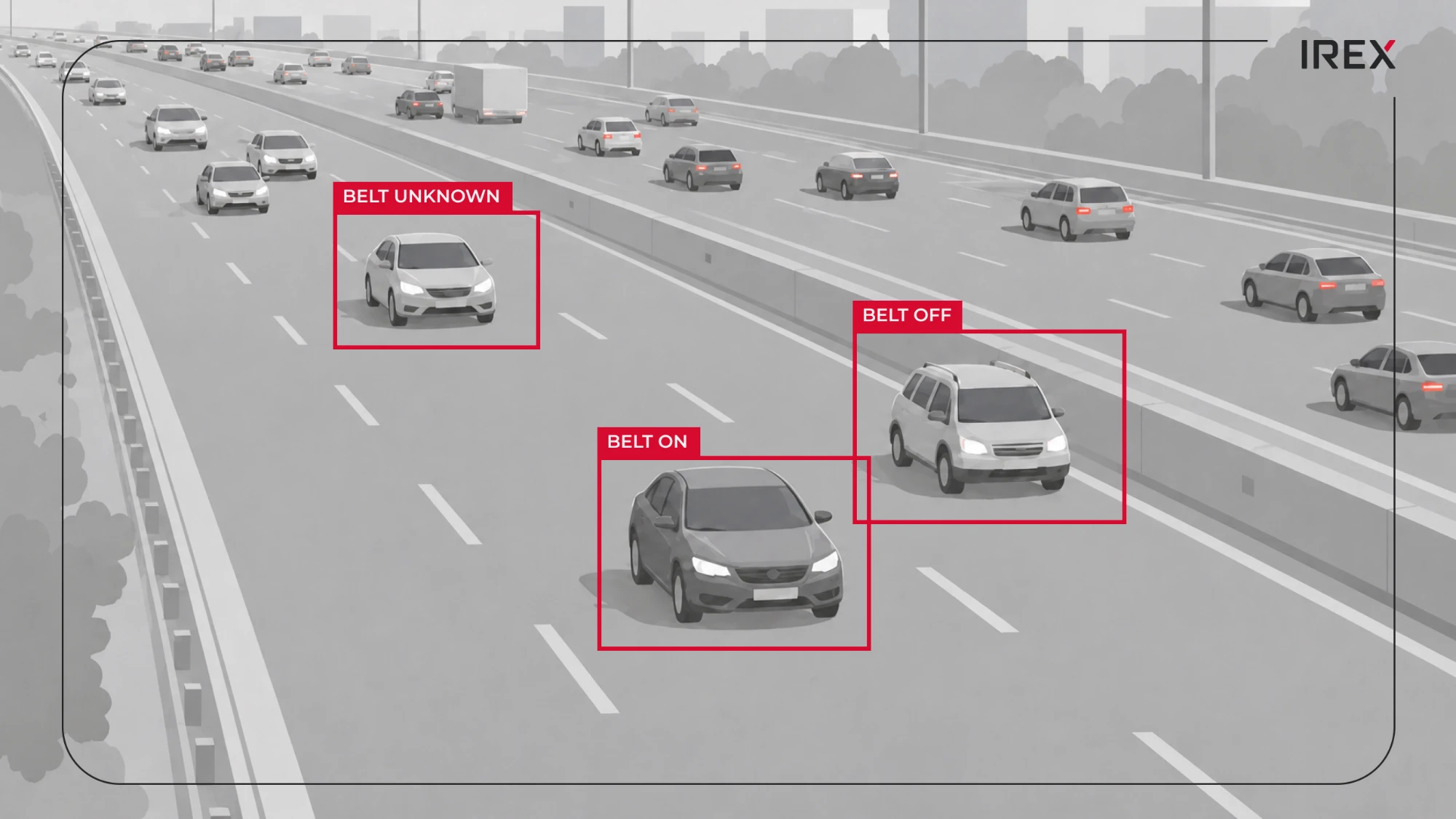
To improve road safety, cities and fleet operators are turning to real-time AI video analytics to monitor seat belt usage. AI-enhanced traffic cameras can now identify whether a driver and passengers are fastened up, even in low light or through tinted windows.
This includes:
- Detecting unfastened drivers or front‑seat passengers automatically
- Triggering alerts to fleet managers or safety officers when violations occur
- Linking detected violations to license plates of the vehicles involved
- Reducing false alarms compared with older rule‑based systems by learning from large datasets of real driving scenarios.
Identifying seat belt status
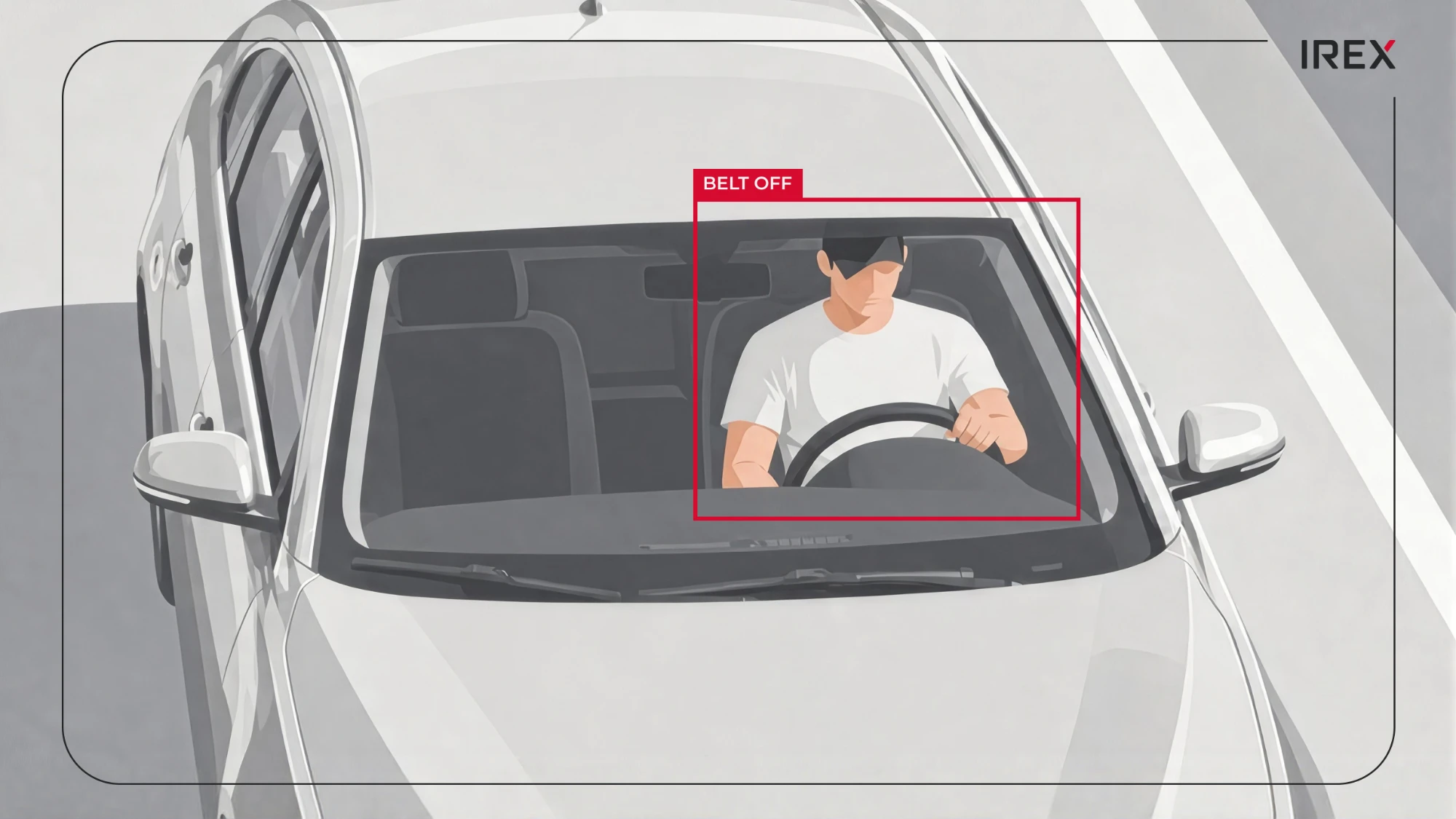
Each front-seat occupant is assigned a seat belt status of either “belt on”, “belt off”, or “belt unknown”. The “unknown” status is necessary because cameras can’t always definitively confirm seat belt usage. Factors like poor lighting, dirt, obstructions, or reflections from the windshield or environment can obscure the view, and so does the color of clothing. For example, a black seat belt might blend in with the black jacket. This approach separates confirmed violations from cases where the image quality is inadequate for a reliable decision.
This helps traffic operators, fleet managers, and public authorities to review large volumes of camera footage more efficiently. Instead of relying exclusively on manual monitoring, operators can receive alerts or review images that the system has identified as possible seat belt violations.
This technology should be treated as a decision-support tool rather than an unquestionable enforcement mechanism. Clear distinctions between “belt off” and “belt unknown” are particularly important. Questionable images must be reviewed by humans or excluded from automatic enforcement. This reduces the risk of false positives and supports a more transparent, responsible use of AI in traffic management.
Why detection matters
Many drivers know they should wear a seat belt but still skip it on short trips, at night, or on familiar roads - precisely when risk remains high. Technology alone won’t make people buckle up, but it closes the gap between rules and practice. Over time, this encourages both drivers and passengers to change their behavior toward the standard of “always belted”.
Seat belts are a proven, low‑cost protection against death and severe injury. AI‑based detection reinforces personal responsibility by making non‑use visible and harder to ignore. So, always buckle up before you move, because the camera and the laws of physics are already watching.
IREX’s solution
IREX is developing an AI-based video analytics solution for detecting drivers and passengers who are not wearing seat belts. The solution uses existing vehicle-detection cameras and analyzes the vehicle, windshield, steering wheel, front-seat occupants, their roles, and seat belt status. By separating confirmed cases (“belt on” or “belt off”) from unconfirmed ones (“belt unknown”), the system provides accurate and reliable monitoring across diverse vehicle types, including cars, buses, and specialized transport.