
Camera Placement
Use a fixed view showing the lane or crossing at useful scale. Check lighting, scale and occlusion on site.

Road Debris Detection Cameras brings debris, uncleared snow, or another object obstructing the road to an operator for review.
The Visible Condition
The observable condition is debris, uncleared snow, or another object obstructing the road at a road section or crossing. A frame can bring the scene to an operator. It cannot establish intent, cause, or the right response.
The Canada set contains an uncleared curb lane, a crosswalk blocked by plowed snow and a shoulder drift with branch and tire debris. Each needs a different maintenance decision. Draw the prompt around the lane or crossing whose use is affected.
An authorized operator can enter a plain-language prompt such as “Alert when debris or uncleared snow blocks the monitored lane.” StreamVLM™ evaluates sampled live frames from selected cameras against it. A match enters the IREX event flow.
Each detector has its own confidence threshold and alert cooldown. The team tests wording and settings on its cameras.
This prompt can be evaluated alongside the Multi-Camera Traffic Analytics trained module. Compare their frame-rate needs and operational fit during a site-specific pilot.
Explore StreamVLM™ →Operational Fit
Use a fixed view showing the lane or crossing at useful scale. Check lighting, scale and occlusion on site.
The reviewer should check whether an obstruction requires maintenance or traffic control. The prompt does not decide this automatically.
Check for shadows, permitted roadside materials, or a maintenance vehicle. Tune camera selection and alert settings during a pilot.
Illustrative Camera Frames
Synthetic frames illustrate possible matches. They are not real incidents, deployments, or accuracy evidence.
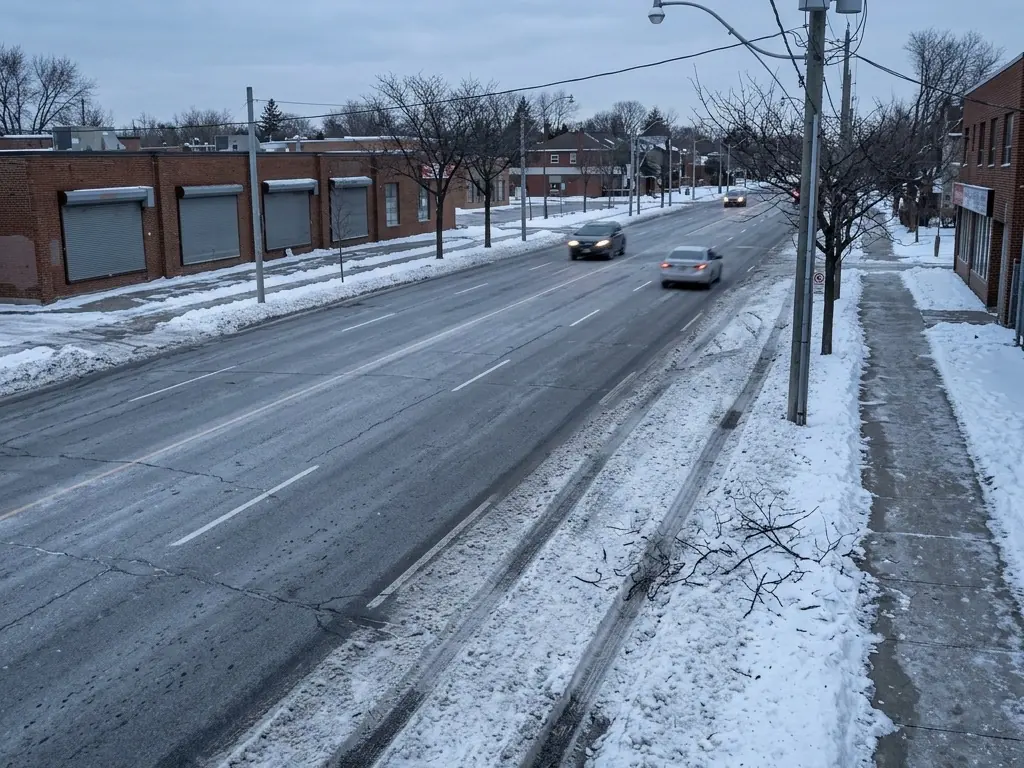
A snow-covered curb lane contrasts with cleared inner lanes. A reviewer checks whether that lane should already be open.
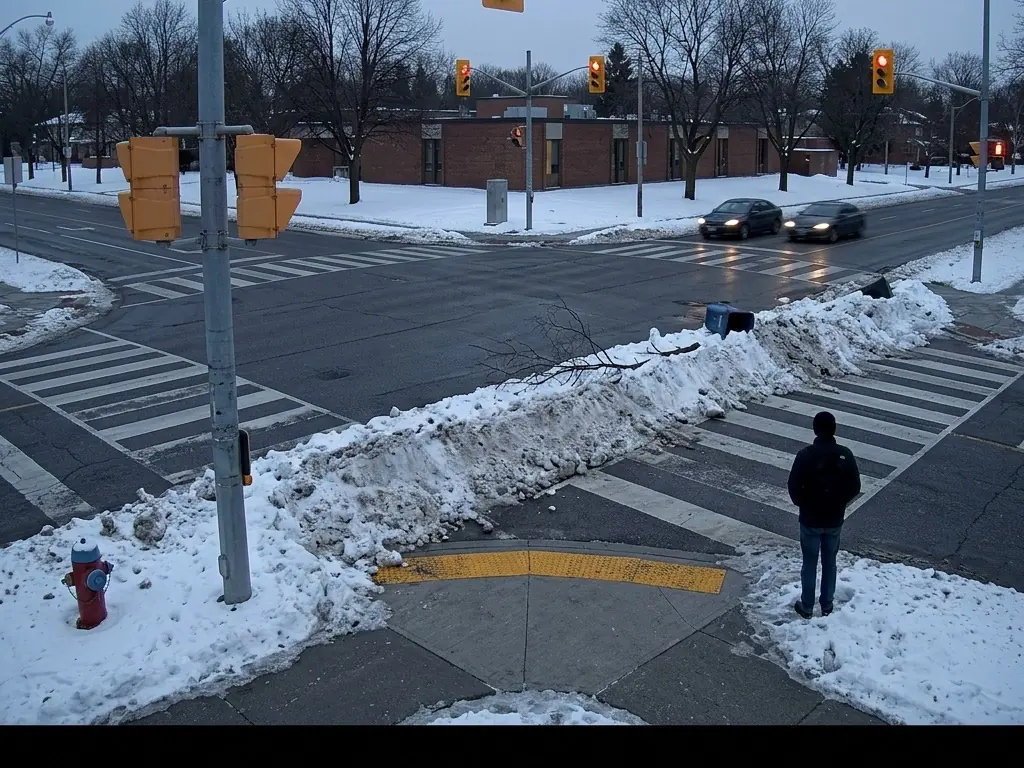
A ridge of plowed snow covers the marked crossing and curb ramp, with a branch and bin on top.
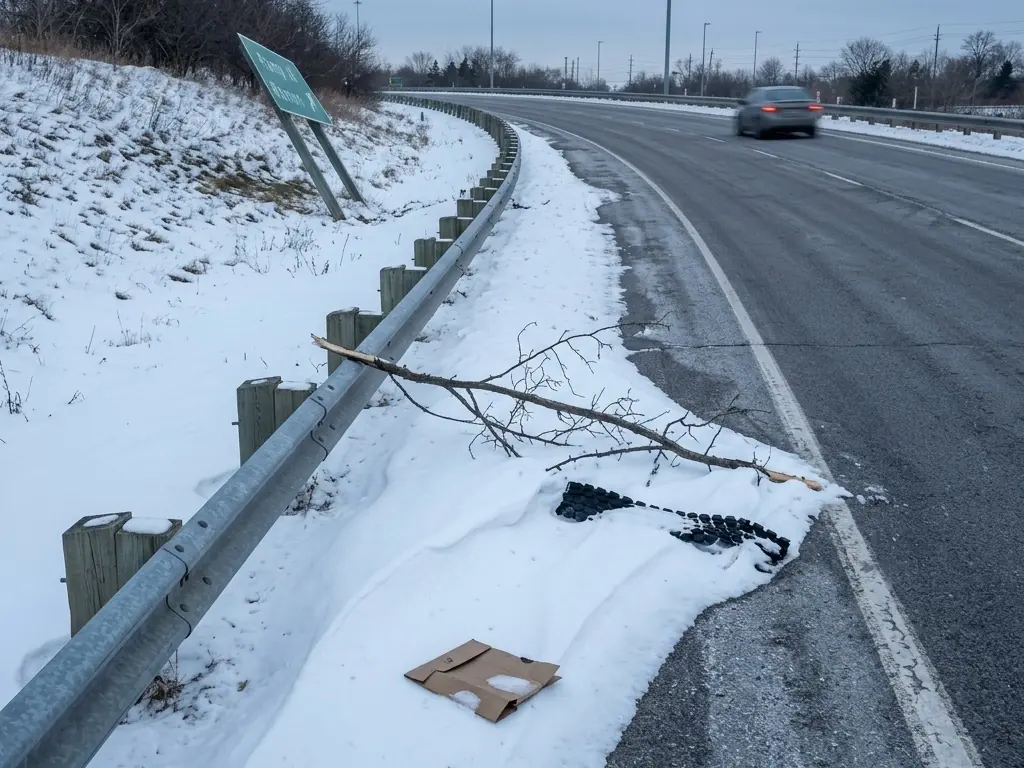
Snow reaches into the running lane beside a branch, tire tread and cardboard. The shoulder line helps locate the obstruction.
From Prompt to Action
Use observable wording such as “Alert when debris or uncleared snow blocks the monitored lane.” on cameras that show the complete relevant scene.
Open the match and surrounding footage. Compare with ordinary scenes such as shadows, permitted roadside materials, or a maintenance vehicle.
A reviewer checks the object and location before a crew is sent or traffic instructions change.
Pilot Questions
Keep Reading
Choose representative views of a road section or crossing. We can scope the prompt, alert settings and review procedure for a pilot.
It reports a match to a described visible condition: debris, uncleared snow, or another object obstructing the road. An operator reviews footage before deciding what happened.
No. A sampled frame cannot establish intent, authorization, responsibility, or cause. Staff check context and follow local procedure.
No. It identifies a visible obstruction. Staff check its position, the usable route and current ground conditions.
Test representative cameras and ordinary scenes, including shadows, permitted roadside materials, or a maintenance vehicle. Agree on useful alerts and missed events. IREX does not publish a universal accuracy figure for this prompt.