
Platforms and Concourses
Flag a person lying beside a bench, in a passage, or near a platform edge so control-room staff can open the clip and decide whether to request a welfare check.

A person on the ground in a station, street, or public building may need help. StreamVLM™ lets an operator describe that visible condition and receive a frame to review.
The Condition
The same posture can follow an armed robbery, a street fight, a fall, or a medical event. A person may also be sleeping or taking shelter outdoors. A frame cannot establish the cause or a person’s circumstances. It can give an operator a reason to check.
In StreamVLM™, an authorized operator writes a condition such as “Detect anyone lying on the floor in the metro, day or night.” The vision-language model evaluates selected live frames against that prompt. A match creates an event with the frame, camera, location and time for review, using the same alert workflow as other IREX video analytics.
StreamVLM™ runs on a GPU node in the customer instance. The operator sets each detector’s confidence threshold and alert cooldown, then chooses the cameras where that condition is relevant.
Explore StreamVLM Prompt Detectors →Where It Helps
Flag a person lying beside a bench, in a passage, or near a platform edge so control-room staff can open the clip and decide whether to request a welfare check.
Focus on lobbies, corridors and entrances where staff cannot watch every camera continuously. Match the prompt to the areas and hours that matter.
Give municipal teams the camera, location and time of a person on the ground. The team decides what the scene means and which service, if any, should respond.
Illustrative Camera Frames
These synthetic Stockholm scenes use the same prompt. They show why a match is a starting point for human judgment, not an incident classification or a measure of accuracy.
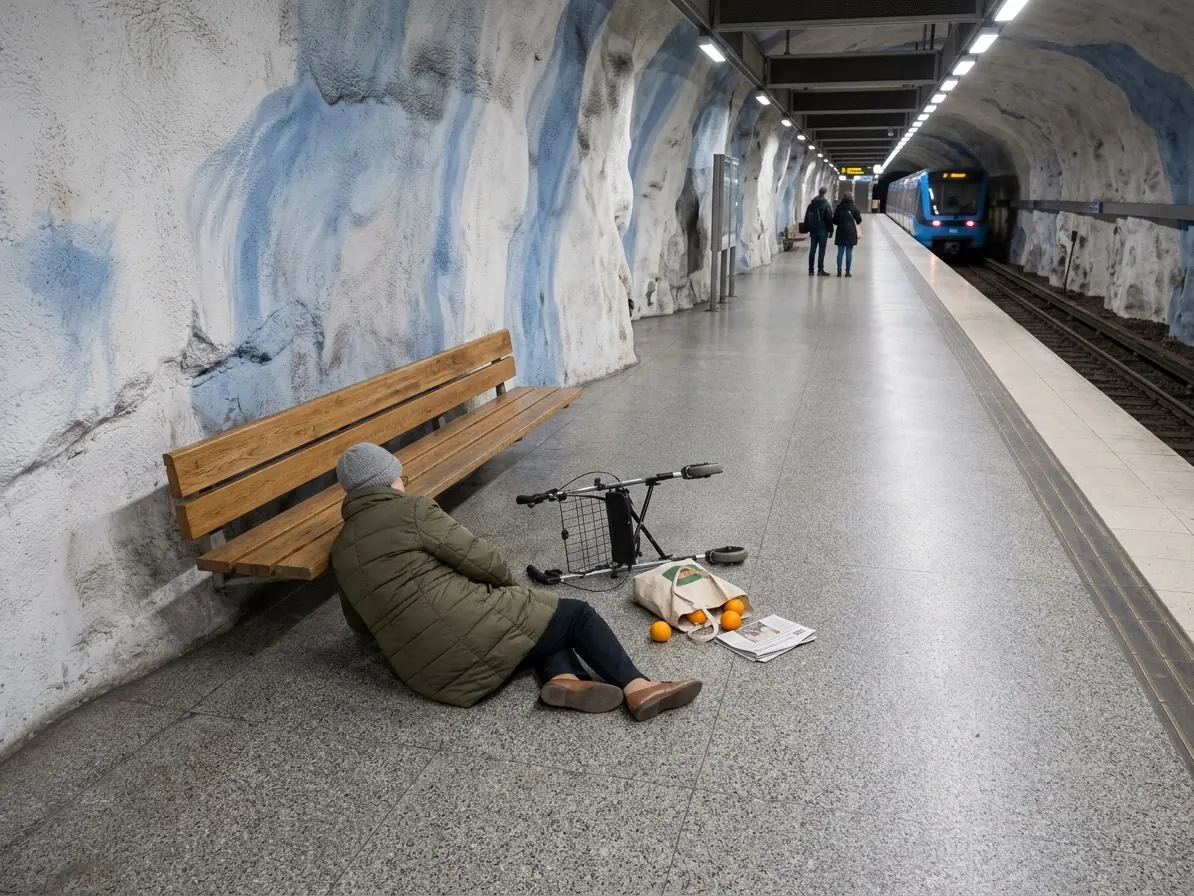
A person is on the platform floor with belongings nearby. The operator can check the live view and request help if needed.
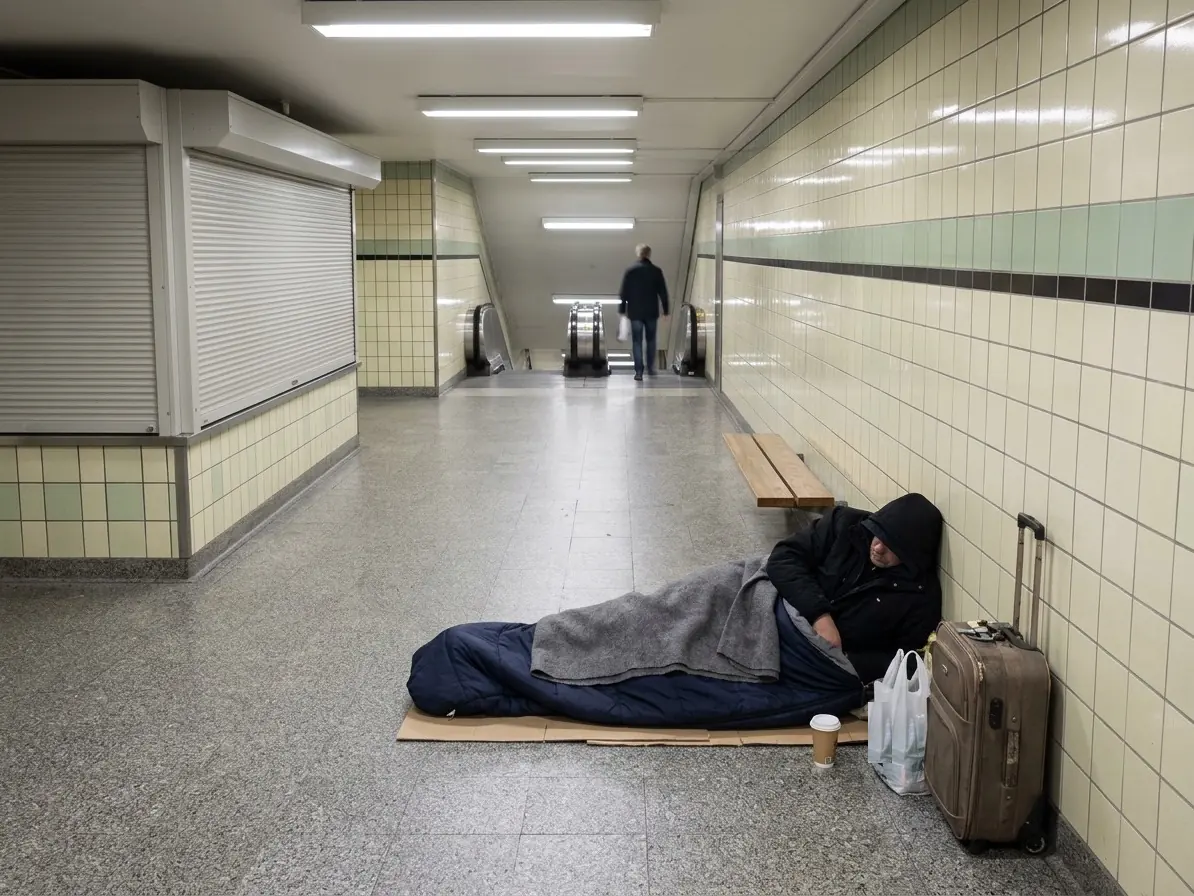
The same posture may call for a welfare response rather than an emergency dispatch. The event does not label the person or their circumstances.
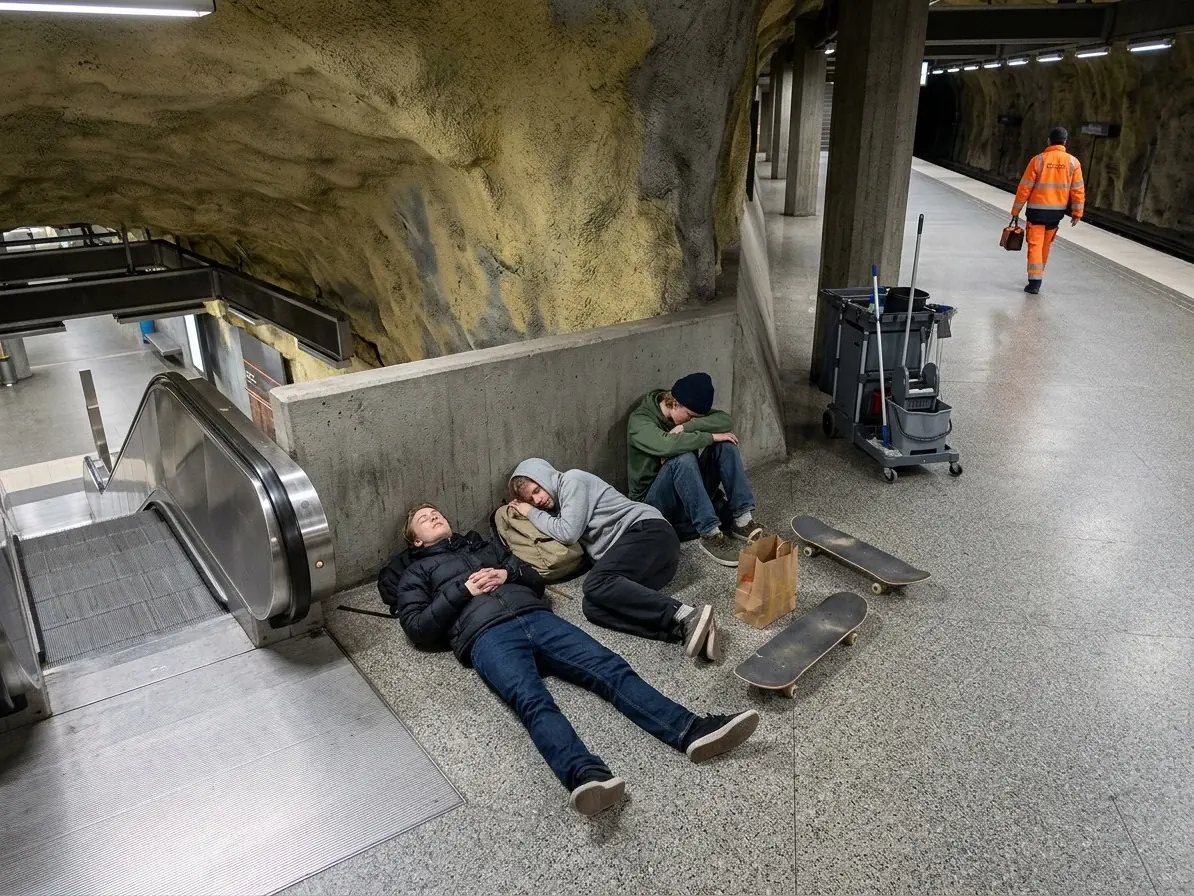
A prompt may also match a harmless pause. Site-specific thresholds, camera selection and human review keep the alert useful.
From Prompt to Action
Write a prompt for a person lying on the ground, then select the cameras and times where that condition warrants attention. Avoid inferring a cause from posture alone.
StreamVLM evaluates live frames and sends a match into the IREX event flow. The alert carries a snapshot, camera, location and time. An operator opens the clip and checks what is happening.
The authorized team may ask on-site staff to check, request medical support, or close a false alarm. Sensitive investigation and evidence actions follow IREX role and Case ID rules.
Operational Fit
Keep Reading
Choose a few representative station, building, or street views. We can scope a pilot around the posture, alert volume and response workflow your team actually needs.
No. It reports the visible condition described in the prompt, such as a person lying on the ground. An operator reviews the live view or clip and decides whether a medical or welfare response is appropriate.
No. The detector does not establish criminal intent or a person’s circumstances. The same prompt can match a collapsed passenger, a person sleeping, or someone resting. Staff review the event and apply the site’s welfare policy.
Yes. A camera channel can carry several StreamVLM prompts and other IREX modules, subject to the deployment’s GPU sizing and camera-specific pilot checks. Each prompt has its own threshold, cooldown and event type.
IREX does not publish a universal accuracy figure for this prompt. Camera angle, image quality, lighting and the local definition of a useful alert all matter. The team measures results on your cameras during a pilot against agreed criteria.