
Camera Placement
Use a fixed view of the lowest roadway with a stable visual reference. Check lighting, scale and occlusion on site.

Flood Detection Cameras brings standing or rising water covering part of an underpass to an operator for review.
The Visible Condition
The observable condition is standing or rising water covering part of an underpass at a low-lying underpass. A frame can bring the scene to an operator. It cannot establish intent, cause, or the right response.
Water can cover a driving lane, climb a ramp, or reach a pedestrian stair. The camera helps staff locate the visible edge of the water. A closure or rescue decision must use the site field procedures, because a frame does not report depth, flow, or hidden hazards.
An authorized operator can enter a plain-language prompt such as “Alert when standing water appears in the underpass roadway.” StreamVLM™ evaluates sampled live frames from selected cameras against it. A match enters the IREX event flow.
Each detector has its own confidence threshold and alert cooldown. The team tests wording and settings on its cameras.
Explore StreamVLM™ →Operational Fit
Use a fixed view of the lowest roadway with a stable visual reference. Check lighting, scale and occlusion on site.
The reviewer should verify whether the route needs inspection, warning, or closure. The prompt does not decide this automatically.
Check for wet pavement, reflections, spray, or a small puddle. Tune camera selection and alert settings during a pilot.
Illustrative Camera Frames
Synthetic frames illustrate possible matches. They are not real incidents, deployments, or accuracy evidence.
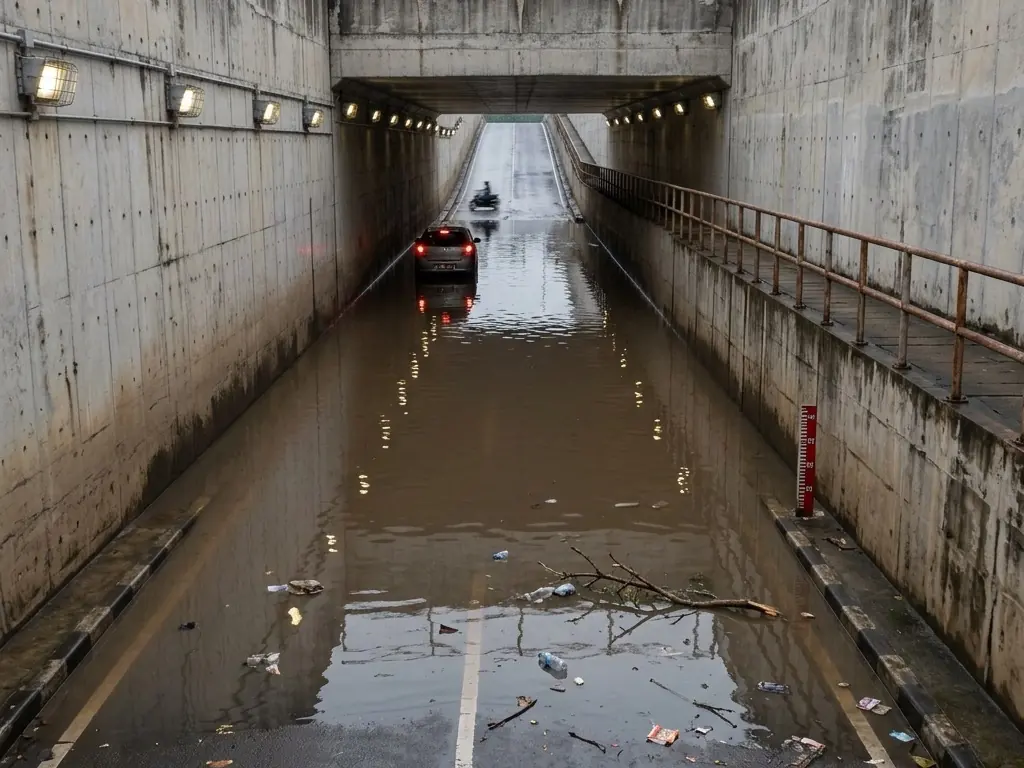
Brown water spans the low part of the underpass while a car stops before entering. The waterline is visible on the walls.
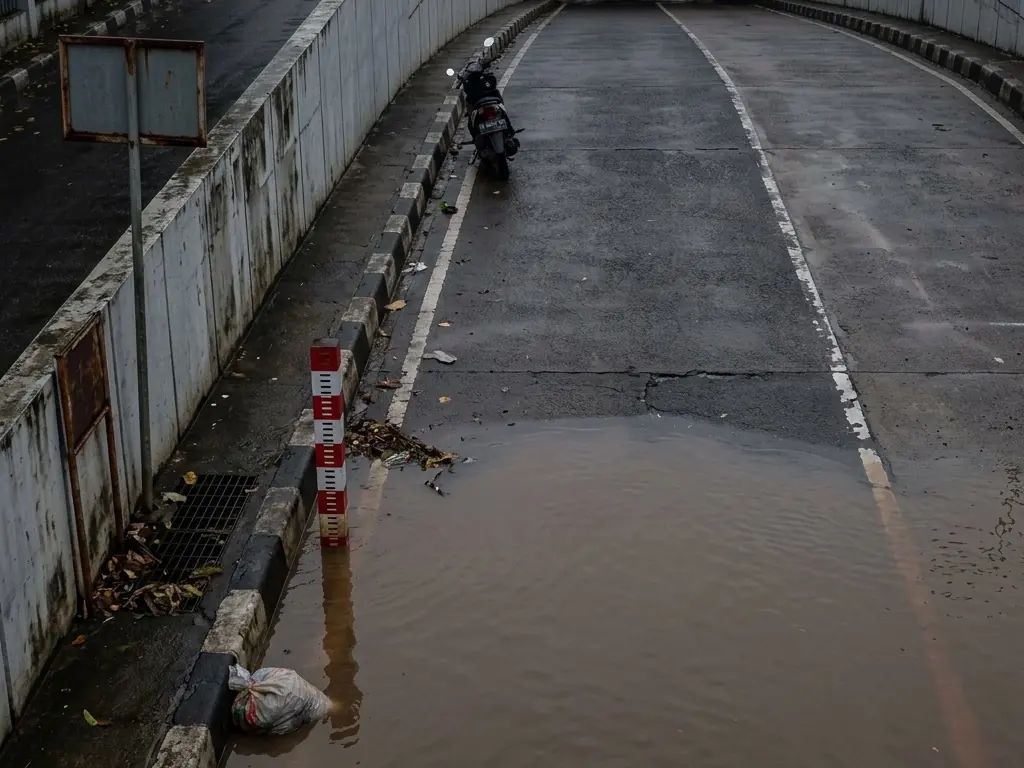
An irregular edge separates dry ramp from submerged roadway. A marker post offers context for staff, not an automatic depth reading.
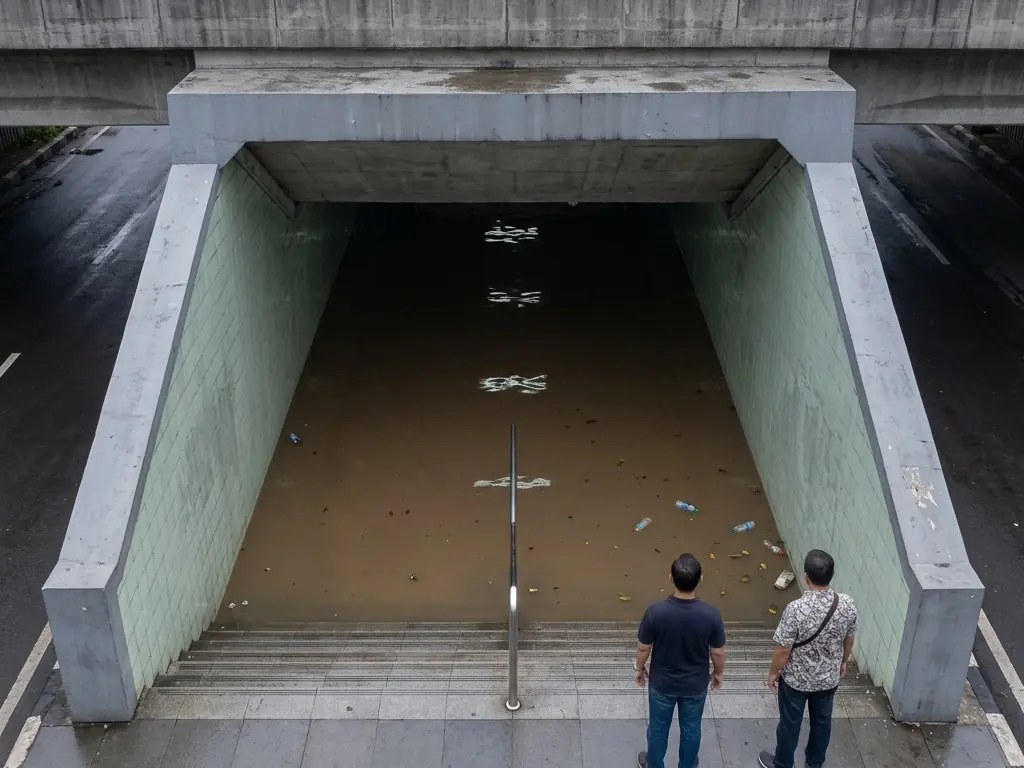
Floodwater reaches most of the covered entrance steps. Pedestrian access needs separate review from vehicle access.
From Prompt to Action
Use observable wording such as “Alert when standing water appears in the underpass roadway.” on cameras that show the complete relevant scene.
Open the match and surrounding footage. Compare with ordinary scenes such as wet pavement, reflections, spray, or a small puddle.
Roads staff confirm the depth through field procedure before a closure. A frame does not measure water depth or flow.
Pilot Questions
Keep Reading
Choose representative views of a low-lying underpass. We can scope the prompt, alert settings and review procedure for a pilot.
It reports a match to a described visible condition: standing or rising water covering part of an underpass. An operator reviews footage before deciding what happened.
No. A sampled frame cannot establish intent, authorization, responsibility, or cause. Staff check context and follow local procedure.
No. Even a visible depth marker needs human interpretation and field verification. The prompt reports appearance, not a calibrated water reading.
Test representative cameras and ordinary scenes, including wet pavement, reflections, spray, or a small puddle. Agree on useful alerts and missed events. IREX does not publish a universal accuracy figure for this prompt.