
Camera Placement
Use a fixed view that shows the lock and hands. Check lighting, scale and occlusion on site.
Bicycle Theft Detection brings someone cutting or forcing a bicycle lock to an operator for review.
The Visible Condition
The observable condition is someone cutting or forcing a bicycle lock at a public bicycle rack. A frame can bring the scene to an operator. It cannot establish intent, cause, or the right response.
A useful prompt focuses on a visible tool or force applied to a bicycle lock. The camera must resolve that small action at the rack. Staff then check context; a bicycle owner may be cutting a damaged lock or a mechanic may be working with permission.
An authorized operator can enter a plain-language prompt such as “Alert when someone cuts or forces a bicycle lock at this rack.” StreamVLM™ evaluates sampled live frames from selected cameras against it. A match enters the IREX event flow.
Each detector has its own confidence threshold and alert cooldown. The team tests wording and settings on its cameras.
StreamVLM™ evaluates sampled frames, so a brief action can fall between samples. Test the actual camera view and response timing before relying on this prompt for an urgent event.
Explore StreamVLM™ →Operational Fit
Use a fixed view that shows the lock and hands. Check lighting, scale and occlusion on site.
The reviewer should review the action before requesting a security check. The prompt does not decide this automatically.
Check for an owner unlocking a bicycle or authorized repair. Tune camera selection and alert settings during a pilot.
Illustrative Camera Frames
Synthetic frames illustrate possible matches. They are not real incidents, deployments, or accuracy evidence.
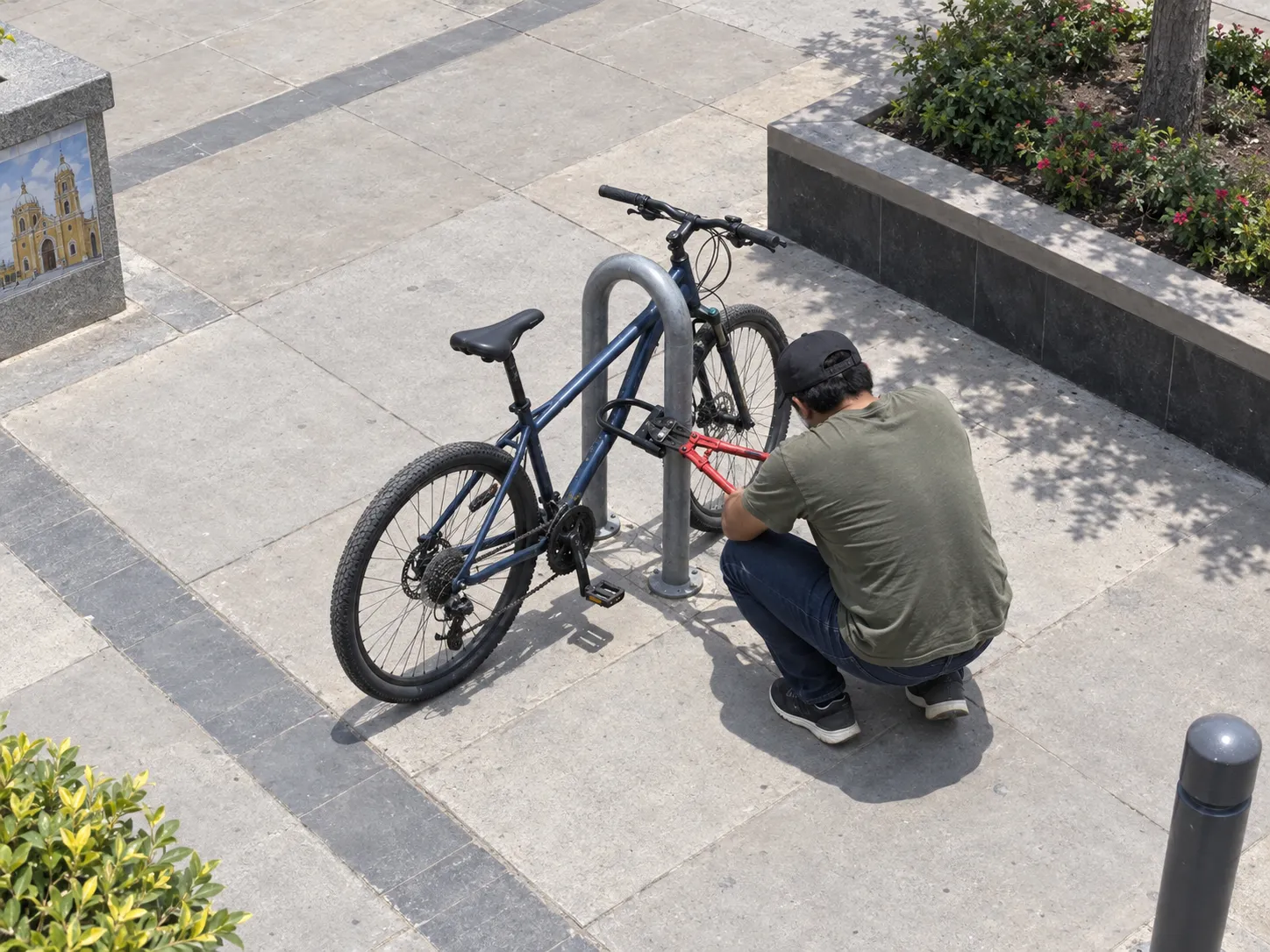
The lock action is visible; ownership and permission still require a human check.
From Prompt to Action
Use observable wording such as “Alert when someone cuts or forces a bicycle lock at this rack.” on cameras that show the complete relevant scene.
Open the match and surrounding footage. Compare with ordinary scenes such as an owner unlocking a bicycle or authorized repair.
Security staff verify the clip and context. Visible action does not establish ownership or criminal intent.
Pilot Questions
Keep Reading
Choose representative views of a public bicycle rack. We can scope the prompt, alert settings and review procedure for a pilot.
It reports a match to a described visible condition: someone cutting or forcing a bicycle lock. An operator reviews footage before deciding what happened.
No. A sampled frame cannot establish intent, authorization, responsibility, or cause. Staff check context and follow local procedure.
No. The prompt concerns a visible action. Ownership and authorization require separate human checks.
Test representative cameras and ordinary scenes, including an owner unlocking a bicycle or authorized repair. Agree on useful alerts and missed events. IREX does not publish a universal accuracy figure for this prompt.