
Highway Approaches
Choose approaches where an animal’s position relative to the lane is visible.

An animal in a travel lane can change quickly as traffic approaches. StreamVLM™ can send the camera frame to an operator who checks the road context.
The Visible Condition
The condition in scope is an animal standing, walking, or crossing in a road lane, shoulder, or highway approach. It is a visible scene detail, not a diagnosis, a conclusion about intent, or an automatic decision.
In StreamVLM™, an authorized operator writes a prompt such as “Alert when an animal is on the road.” The model evaluates selected live frames against that prompt and sends a match, camera, location and time into the IREX event workflow for human review.
StreamVLM™ runs on a GPU node in the customer instance. Each prompt has its own confidence threshold, alert cooldown, event type and camera selection.
Explore StreamVLM Prompt Detectors →Where It Helps
Choose approaches where an animal’s position relative to the lane is visible.
Review the live road scene for the animal, traffic and safe access for responders.
Use the alert to contact the responsible road or animal-control team when appropriate.
Illustrative Camera Frames
These illustrative frames show the kind of visible condition a prompt can surface. They are not real incidents, deployments, or proof of detection accuracy.
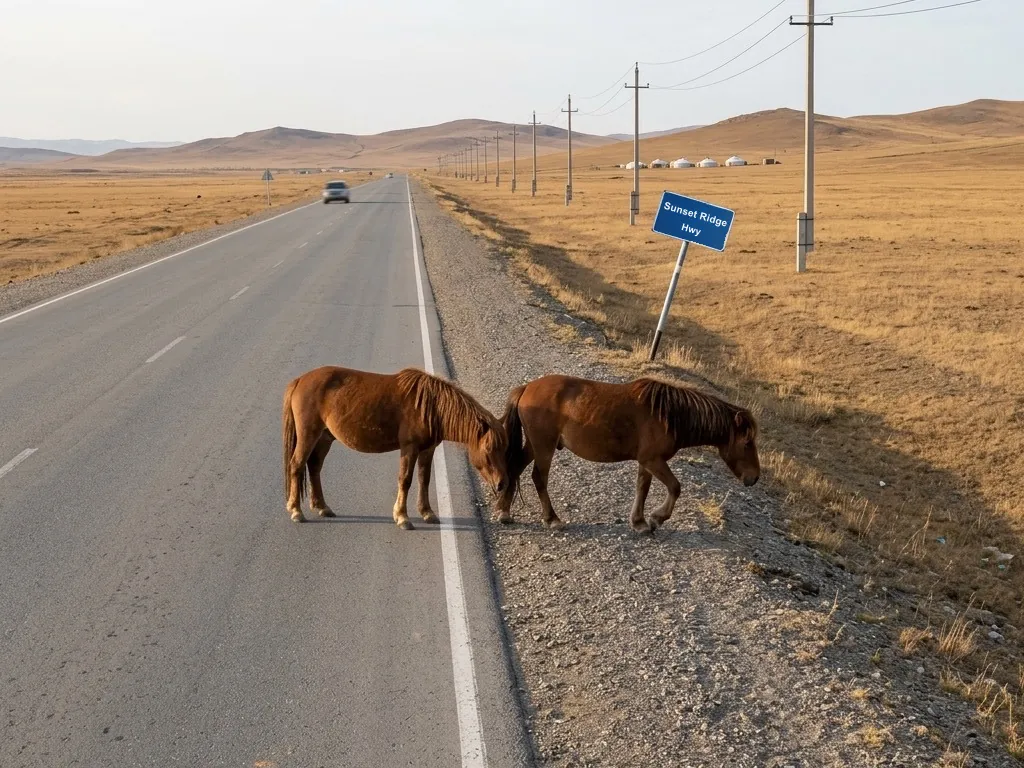
The operator checks the road lane, shoulder and nearby traffic before choosing a response.

An animal near the roadway can need review even before it enters a lane.

The camera frame gives the operator location and context to verify the visible condition.
From Prompt to Action
Write a concise prompt for an animal standing, walking, or crossing in a road lane, shoulder, or highway approach, then select the cameras and times where the condition warrants attention.
Open the event with its camera, location, time and available video context. Confirm what is visible before treating the match as actionable.
The authorized team applies the local procedure. StreamVLM supplies a review cue; it does not decide the response.
Limits to Test
Use representative rural or highway cameras to agree which lane and shoulder conditions warrant a road-operations response.
No universal coverage claim is published. Test the animals, distances, lighting and road layouts that occur on the cameras selected for a pilot.
No. It reports a match to the visible condition in the prompt. An operator reviews the frame and local context before deciding what it means.
Start with representative cameras, define what makes a useful alert, then adjust the camera selection, confidence threshold and alert cooldown during a camera-specific pilot.
IREX does not publish a universal accuracy figure for this prompt. Image quality, camera angle, lighting, occlusion and the local definition of a useful alert all affect results.