
Smarter Streets with IREX: Improved Cycling Safety and Violation Monitoring

MURRIETA, CA - IREX , a global leader in ethical AI and intelligent monitoring based in California, USA, has announced a major update to its Cycling Track module . It gives city traffic engineers, police and mobility planners an accurate picture of cyclist movements and risk hots…
MURRIETA, CA - IREX, a global leader in ethical AI and intelligent monitoring based in California, USA, has announced a major update to its Cycling Track module. It gives city traffic engineers, police and mobility planners an accurate picture of cyclist movements and risk hotspots, helping cut accidents and delays. The module detects cyclists in mixed traffic, flags dangerous maneuvers like wrong‑way riding or red‑light running, and reveals hidden conflict points, treating cyclists as equally valuable road users who deserve the same optimization long applied to cars and public transport.
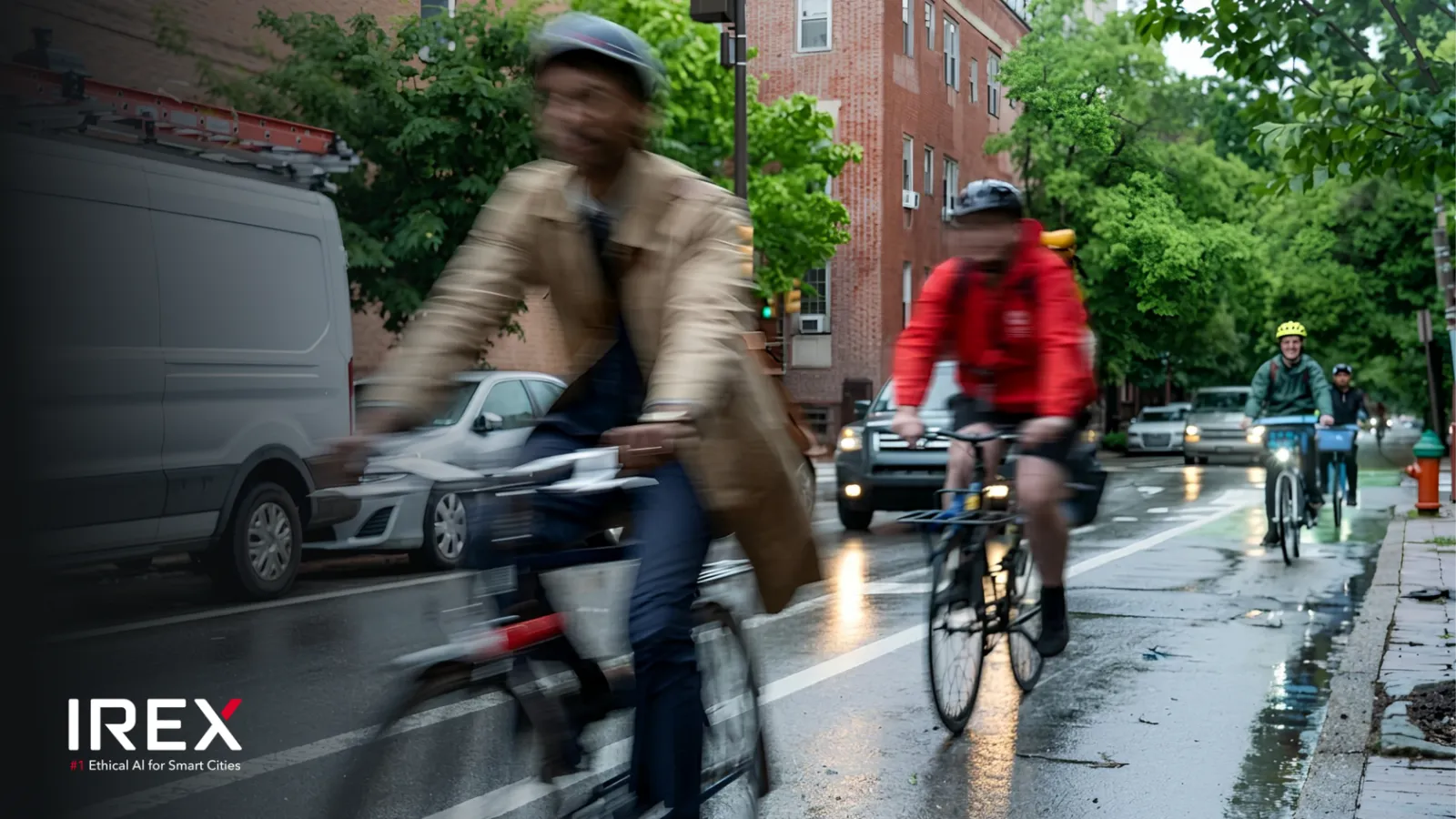
A new step in bicycle detection
The latest version 4.35 introduces a new level of accuracy and reliability for recognizing cyclists in real‑life conditions. It now runs on the YOLO v26 detection model, replacing YOLO 11, and delivering a substantial boost in object detection accuracy and consistency for complex urban roads. Training required extensive data preparation and labeling, using diverse footage from Latin America, particularly Peru, where busy intersections and mixed traffic often show more than 20 vehicles and bicycles in a single frame. This ensured reliable cyclist recognition even in crowded visual contexts.
A key focus of the update is correctly identifying the person-bicycle association, so the system treats both bounding boxes as a single cyclist entity. The new model provides more consistent recognition in dense street scenarios. Early testing shows noticeable gains in spatial precision, fewer false positives and missed detections, and a stronger foundation for analytics.
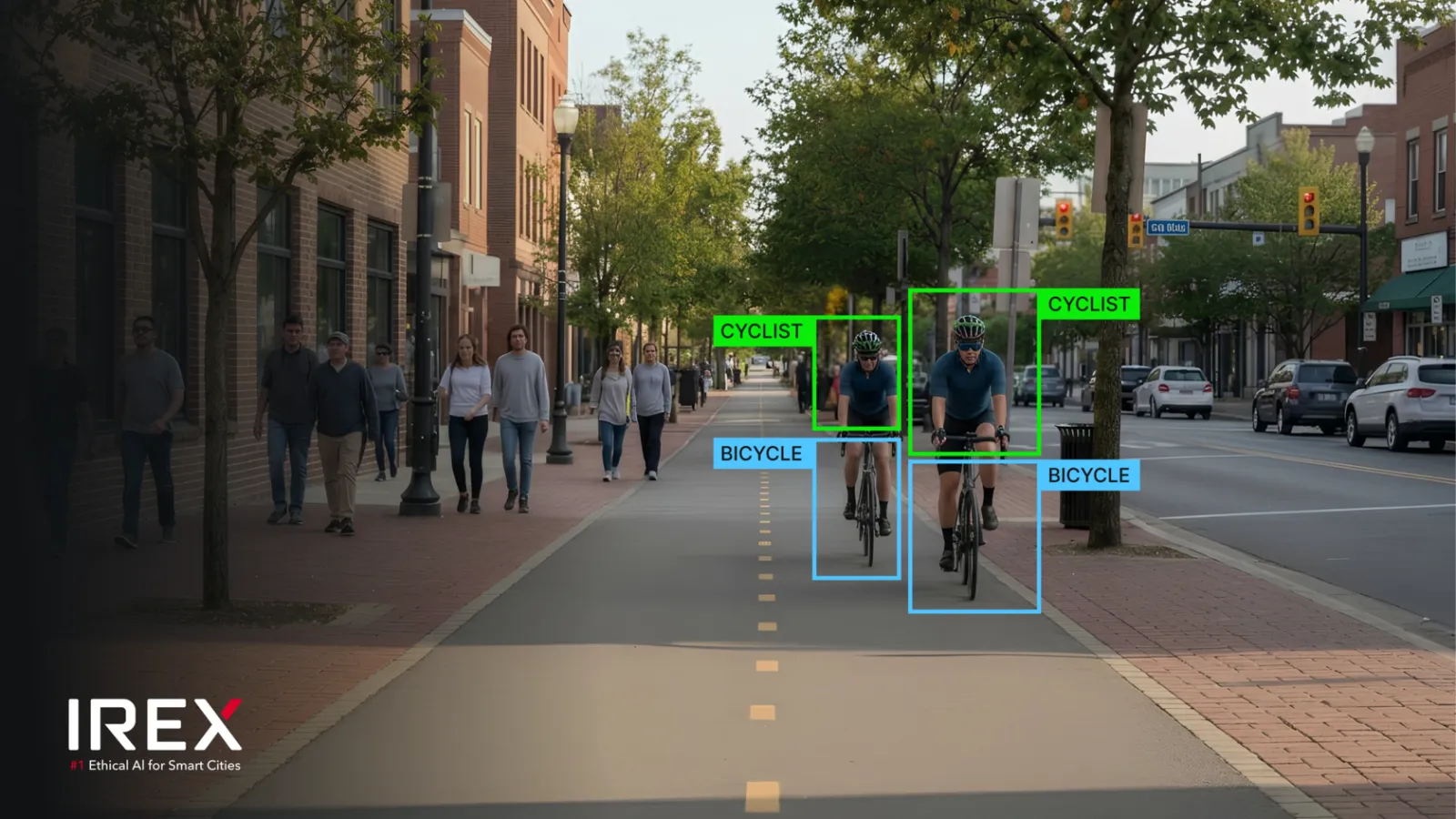
Smarter rules for safer cycling
Beyond the improved detector, the Cycling Track module adds new options for route and direction settings to monitor violations on bicycle lanes. Operators can mark signal lines and define allowed directions: when a cyclist crosses a line in a restricted or opposite direction, the system automatically generates a violation event. Filtering happens at the video analytics layer to focus only on relevant cycling events, reducing unnecessary alerts, optimizing bandwidth and minimizing noise. These rules follow the same logic as those already used in the Traffic module for other vehicles.
While the main focus of the current update is to enhance cyclist detection, advanced computer vision capabilities offer the potential to monitor safety compliance, such as detecting correct safety helmet wear.
In countries with high cycling volumes, such as the Netherlands and Denmark, and in fast‑growing cycling cities like Berlin and Ghent, the module provides practical evidence to optimize layouts, signal timing, and enforcement without increasing accidents or congestion. IREX’s approach to cycling tracking supports more bike‑friendly cities, smarter rules and safety habits, and a better everyday experience for cyclists.