


Operations
Cloud Video Management

Real-Time Crime Center

Real-Time Alerts

Collaboration & Messenger

Map & Object Tracking

Dashboards & Reporting

Infrastructure


Transportation
Roads & Traffic

Metro & Railways

Airports & Ports

Bus Shelters & Transit

Traffic Safety & Enforcement

According to statistics, there were over 19,500 gun-related homicides in 2020 in the United States of America. In 2021 over 20,900 cases were reported by Gun Violence Archive.
From 2019 to 2021, the number of mass shootings has doubled and increased by 52% in the last year. With this in mind, we have developed a powerful Gun Detection Technology to help you reduce response time and be more proactive in critical situations.
AI-Powered Threat Detection
We detect the following incidents with 99% probability within the first 25 seconds.
-
 Perimeter Intrusions
 -
 Active Shooters
 -
 Wanted Criminals*
* using IREX Ethical Face Recognition Technology
How it Works
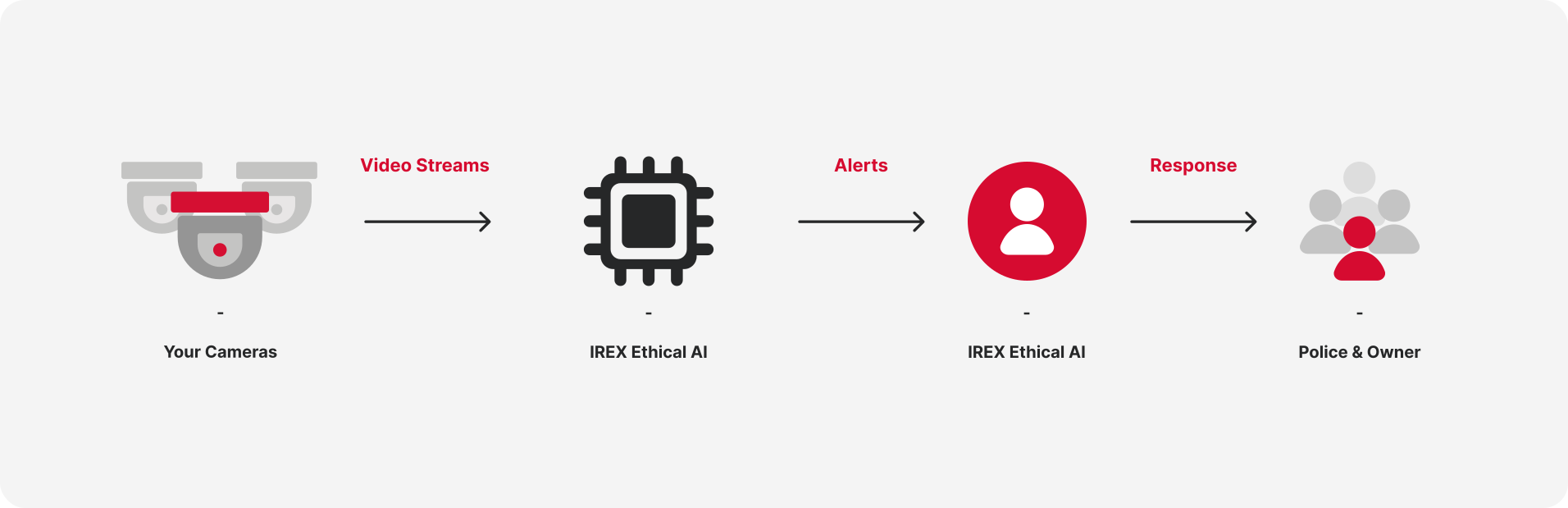
IREX in Schools: Immediate Threat Detection
Most schools have security cameras and those cameras are meant to ensure safety and situational awareness. The problem is that administrators and staff are unable to constantly monitor the cameras. With the implementation of AI technology - staff, law enforcement or anyone you choose to be notified can be alerted to a multitude of events that are occurring in real-time.

Real-time threat detection and alerts for immediate response
Three Critical Contributing Factors
At IREX, we have conducted a think tank on this recurring tragedy that haunts every parent’s dream. There were many insightful thoughts that came out of it. For example, In an active shooter and mass killing situation, there are three critical contributing factors that will determine the outcome of the situation:
-1-
Detection
-2-
Notification
-3-
Response

A police officer receiving a weapon detection alert
In a typical mass shooting incident, police are notified after the shots have been fired. At this point, there has already been a delay. Once victims realize what's going on and process the situation sometimes the first call is to family members. Calls to the police still have to go through a routing system for information gathering and then are finally dispatched. According to the FBI the average response time for law enforcement is 3 min. So where can we save time and essentially save lives?
Police Response Time to Active Shooter Attacks

This graph shows police response time for active shooter events. For the 51 cases that included the data, the median response time was three minutes—fast by law enforcement standards. Source: fbi.gov
"IREX Clearly Saves Lives"

“
As a law enforcement officer with over 16 years of training and experience as a police detective, major incident commander, police technology instructor, and supervisor, I understand that with IREX early detection reduces response time and will save lives. If the shooter is in the school. IREX will track the suspect throughout the hallways regardless of clothing changes. Police will also have real-time information about the location so they can quickly respond to the correct door. In a chaotic situation, accurate real-time information helps law enforcement stop the killing.
“
Unfortunately tragedies on campuses have increased tremendously. Mental health is on the rise due to the current world climate. School districts really need to take a look at themselves, and I ask if they are in business to change children’s lives. To do so, they need to be alive to be given that chance. IREX is that chance, technology is a must and if you agree then use the best. IREX Real-Time proactive approach allows law-enforcement and school officials to act immediately. IREX clearly saves lives, you cannot put a price on a child’s life, or anyone for that matter. IREX is the leader and should be used by every school district in the United States. Expect the unexpected, don't let the next tragedy hit home.
“
Are you tired of seeing young kids murdered at schools by active shooters? No matter what your political affiliation is, we can all agree that people with intentions to kill innocent children should be stopped. IREX AI uses the most advanced, state-of-the-art technology to detect crimes in real-time to stop predators in their tracks. IREX AI connects cameras and sensors to a secure, private cloud, analyzing data to assess threats in real-time. This provides vital, pro-active opportunities to stop active shooters while ethically protecting the privacy and American liberties of citizens.
Our comprehensive service includes:
- 24/7 public safety monitoring
- AI-powered threat detection video analytics
- 25-second video verifications by experience operators
- Professional response & police coordination
- 365-day video retention for all incidents
- Network operation control (NOC)
Professional Response
-
 Communication with Staff, Victims, Criminals, Police, and Emergency Services
 - Police and Security Guard Coordination
- Customer Support (e.g. on Unattended Gas/EV Charging Stations)
- Incident Documenting and Logging
We Protect 24/7
Find our Global Representatives on the Map